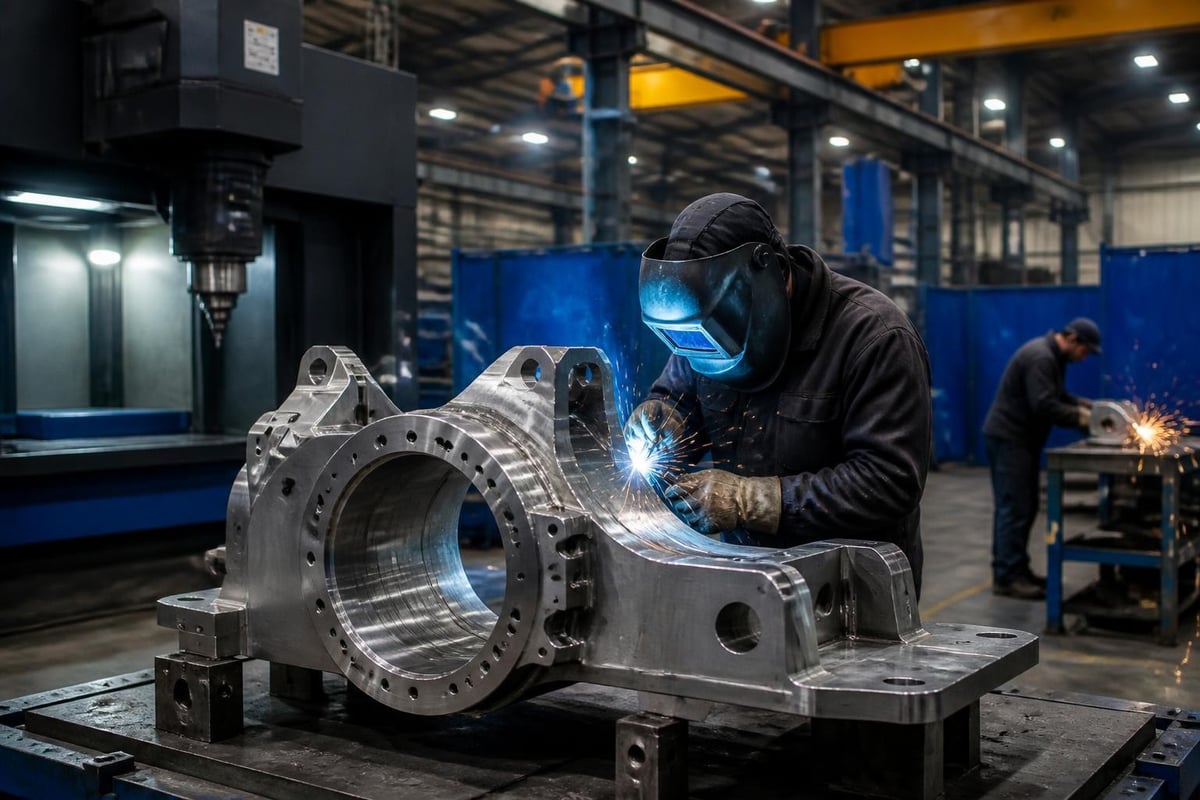
Finding the right partner for specialized industrial projects requires more than just standard manufacturing capabilities. A custom manufacturing company provides tailored solutions that address unique operational challenges across diverse sectors, from oil and gas to recycling and aggregate processing. These specialized providers combine advanced welding, machining, and fabrication expertise to deliver components and systems that meet exact specifications, ensuring businesses can maintain productivity and achieve their operational goals.
Understanding Custom Manufacturing Capabilities
A custom manufacturing company differs fundamentally from mass production facilities by focusing on specialized, project-specific solutions rather than standardized products. This approach allows industrial operations to obtain precisely engineered components that integrate seamlessly with existing systems and processes.
Custom manufacturing encompasses multiple disciplines working in concert. Metal fabrication forms the foundation, where raw materials transform into structural components and assemblies. Precision machining ensures tight tolerances and exact specifications for critical parts. Welding expertise joins these components with structural integrity that withstands demanding industrial environments.
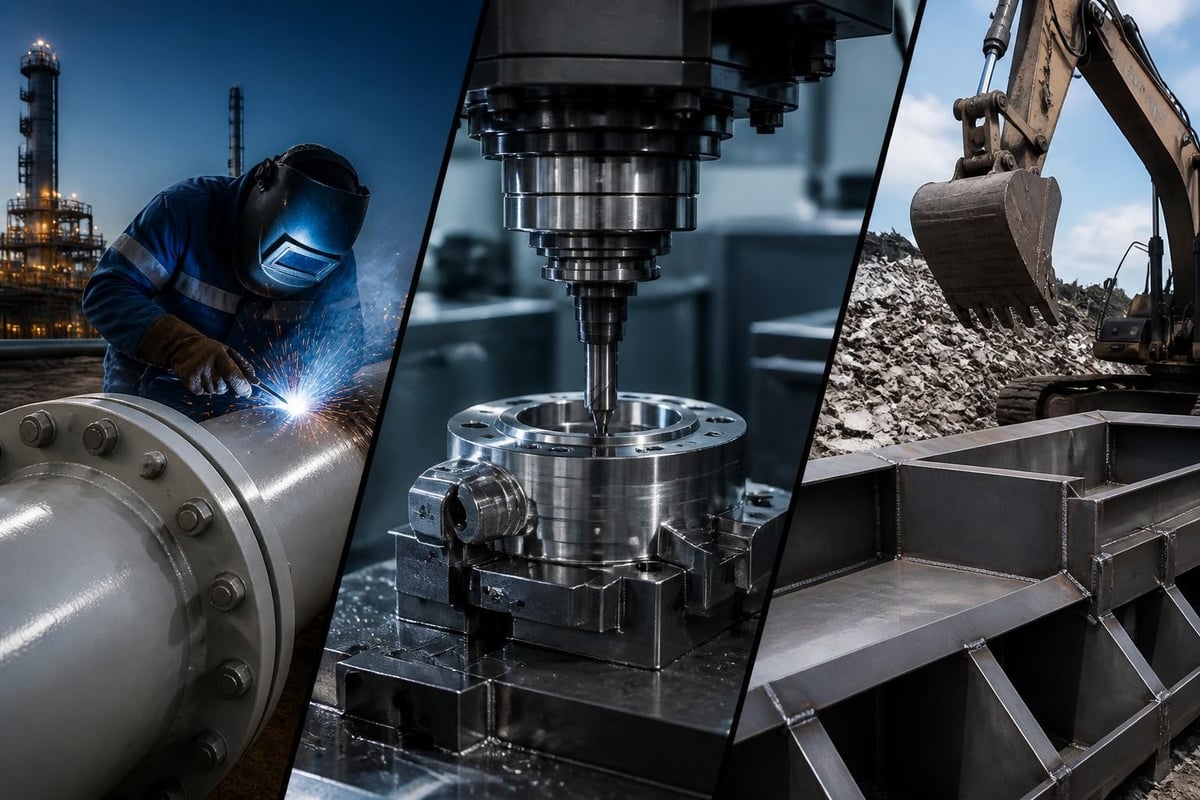
The industries served by custom manufacturing span commercial and industrial sectors with complex requirements. Oil and gas operations require specialized equipment that withstands extreme pressures and corrosive environments. Recycling facilities need robust systems capable of processing diverse materials efficiently. Aggregate processing plants depend on durable components that resist abrasive wear during continuous operation.
Key Service Categories
Metal Fabrication Services
Metal fabrication represents the cornerstone of custom manufacturing operations. This discipline transforms sheet metal, plate, and structural materials into finished components through cutting, forming, and assembly processes. Modern fabrication shops utilize both traditional craftsmanship and advanced equipment to achieve precise results.
Fabrication capabilities typically include:
- Structural steel assembly for frames and support systems
- Sheet metal forming for enclosures and protective covers
- Custom brackets and mounting systems
- Specialized equipment modifications
- Replacement part manufacturing
Precision Machining Operations
Machining services complement fabrication by providing the tight tolerances required for moving parts, bearing surfaces, and critical interfaces. Manufacturing and machining capabilities enable a custom manufacturing company to produce components that meet exacting dimensional requirements.
CNC machining centers deliver repeatable accuracy for complex geometries. Manual machining operations handle unique one-off parts and repairs. Lathe work produces cylindrical components with precision diameters and surface finishes. Milling operations create flat surfaces, slots, and intricate features.
Specialized Welding Expertise
Welding quality directly impacts the longevity and safety of fabricated assemblies. Professional welders apply various techniques suited to different materials, thicknesses, and application requirements. GMAW, FCAW, SMAW, and TIG processes each offer distinct advantages for specific joining challenges.
| Welding Process | Primary Applications | Key Advantages |
|---|---|---|
| GMAW (MIG) | General fabrication, production runs | Speed, clean results, versatility |
| FCAW | Outdoor field work, thick materials | Wind resistance, deep penetration |
| SMAW (Stick) | Field repairs, remote locations | Portability, no shielding gas required |
| TIG | Precision work, exotic materials | Clean finish, precise control |
Meeting Industry-Specific Requirements
Different industrial sectors present unique challenges that require specialized knowledge and capabilities. A custom manufacturing company serving multiple industries develops expertise across various applications while understanding the specific demands of each sector.
Oil and Gas Sector Demands
Oil and gas operations require components that perform reliably under extreme conditions. High-pressure systems demand precise machining and certified welding procedures. Corrosion-resistant materials and coatings extend service life in harsh environments. Rapid turnaround for critical repairs minimizes costly downtime.
Field services become particularly valuable in remote oil and gas locations where transporting equipment to a shop proves impractical. Mobile welding and machining capabilities bring the workshop to the wellsite, enabling repairs and modifications without extended shutdowns.
Recycling Industry Applications
Recycling facilities process diverse materials that create abrasive and impact-loading conditions. Conveyor systems require regular maintenance and custom component replacement. Sorting equipment modifications accommodate changing material streams. Structural repairs address wear from continuous operation.
Custom manufacturing solutions for recycling operations often involve:
- Engineering wear-resistant components for high-abrasion areas
- Fabricating custom screens and separators for specific material types
- Designing reinforced structures for heavy-impact zones
- Creating modular systems that facilitate rapid changeovers
- Developing maintenance solutions that minimize operational disruptions
Aggregate Processing Solutions
Aggregate operations face similar wear challenges while processing rock, sand, and gravel. Crusher components endure tremendous forces and abrasion. Conveyor systems transport heavy, sharp-edged materials continuously. Screen decks require frequent replacement as material wears through openings.
According to recent industry analysis, the evolution of mass custom manufacturing demonstrates how facilities must adapt rapidly to meet increasing demands for speed and precision. This trend particularly affects aggregate producers who balance production volumes with equipment reliability.
Geographic Considerations for Western Operations
Operating across the Western United States presents logistical and operational considerations that influence how a custom manufacturing company delivers services. The region's vast distances, varied terrain, and dispersed industrial facilities require strategic capabilities.
Mobile Service Advantages
Shop-based manufacturing provides controlled environments with full equipment access, but field services eliminate transportation delays and costs for large assemblies. Mobile welding units equipped with generators and welding machines travel to remote sites. Portable machining equipment handles on-site repairs without disassembly.
Benefits of field service capabilities:
- Reduced equipment downtime through on-site repairs
- Elimination of transportation costs for heavy components
- Ability to address emergency situations immediately
- Modifications performed without system shutdowns
- Real-time problem-solving with operational context
Regional Industry Clusters
The Western United States contains concentrated industrial activity in specific regions. Colorado's energy corridor supports oil and gas operations alongside renewable energy projects. Nevada and Utah host significant mining and aggregate production. New Mexico and Wyoming maintain robust energy extraction industries.
Understanding regional industry concentrations helps a custom manufacturing company position resources effectively. Strategic location in central areas like Rifle, Colorado, provides reasonable access to multiple industrial zones while maintaining lower operating costs than major metropolitan areas.
Quality Assurance and Certification Standards
Industrial clients require confidence that manufactured components meet applicable standards and will perform as specified. Quality assurance processes and relevant certifications demonstrate a custom manufacturing company's commitment to consistent results.
Welding Quality Standards
Welding procedures for critical applications follow codes established by organizations such as the American Welding Society (AWS) and American Society of Mechanical Engineers (ASME). Certified welders maintain qualifications for specific processes and materials. Weld inspection using visual, penetrant, magnetic particle, or radiographic methods verifies joint integrity.
Documentation requirements vary by application. Pressure vessels require complete weld records with inspector signatures. Structural work may need certified mill test reports for materials. Field repairs often demand photographic documentation of procedures and results.
Material Traceability
Material certification ensures components consist of specified alloys with appropriate mechanical properties. Mill test reports accompany metal purchases, documenting chemical composition and physical characteristics. Maintaining material traceability throughout fabrication prevents mixing grades or substituting unapproved materials.
| Quality Process | Purpose | Typical Applications |
|---|---|---|
| Material Testing | Verify composition and properties | Pressure vessels, critical structures |
| Weld Inspection | Ensure joint integrity | All welded assemblies |
| Dimensional Verification | Confirm specifications met | Machined components, assemblies |
| Surface Treatment Validation | Check coating thickness/adhesion | Corrosion protection applications |
Measurement and Inspection
Precision machining requires verification that dimensions fall within specified tolerances. Calibrated measuring instruments including micrometers, calipers, and height gauges confirm critical dimensions. Coordinate measuring machines (CMM) verify complex geometries when required.
First-article inspection establishes that initial production meets specifications before proceeding with additional quantities. In-process checks catch deviations early, preventing scrap and rework. Final inspection ensures completed work satisfies all requirements before delivery.
Technology Integration in Custom Manufacturing
Modern custom manufacturing operations increasingly incorporate advanced technologies that enhance capabilities, improve accuracy, and reduce lead times. Research into artificial intelligence in customized manufacturing explores how AI-driven systems optimize production processes and quality control.
Computer-Aided Design and Manufacturing
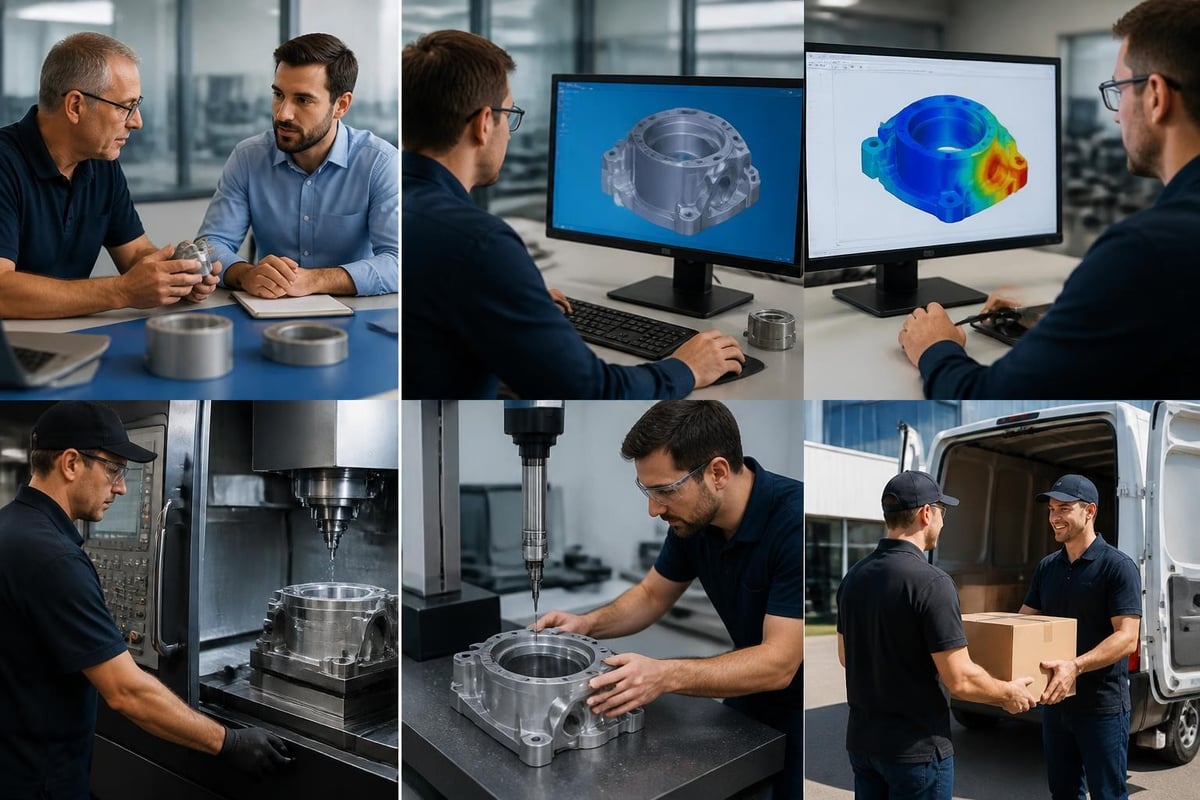
CAD software enables precise design development and client collaboration before cutting metal. 3D models reveal fit issues and allow modifications before fabrication begins. CAM programming converts designs into machine tool paths, reducing programming time and improving accuracy.
CNC equipment controlled by CAM programs delivers consistent results across production runs. Complex geometries that challenge manual machining become routine with multi-axis CNC capabilities. Automated tool changes and part fixtures increase productivity while maintaining quality.
Digital Documentation Systems
Project management systems track jobs from quotation through delivery, ensuring nothing falls through cracks. Digital work orders eliminate handwriting interpretation issues. Photograph documentation creates visual records of processes and results.
Cloud-based systems enable field technicians to access drawings, procedures, and specifications from remote locations. Real-time updates keep shop and field teams synchronized. Customer portals provide project status visibility without phone calls.
Developing Effective Client Partnerships
Success in custom manufacturing extends beyond technical capabilities to include collaborative relationships that align manufacturing solutions with client objectives. Understanding operational contexts, constraints, and goals enables more effective problem-solving.
Consultation and Engineering Support
Many manufacturing challenges benefit from early collaboration between clients and fabrication teams. Experienced fabricators recognize potential issues with proposed designs and suggest modifications that improve manufacturability, reduce costs, or enhance performance.
Value engineering reviews identify opportunities to achieve required functionality through alternative approaches. Material substitutions might deliver equivalent performance at lower cost. Design simplifications could reduce fabrication time without compromising quality. Modular construction may facilitate future maintenance and modifications.
Responsive Communication
Industrial operations cannot afford extended delays waiting for quotes, updates, or delivery schedules. Responsive communication demonstrates respect for client time constraints and operational pressures. Prompt quotation turnaround enables project planning and budget development. Regular progress updates prevent surprises and allow schedule adjustments.
Emergency situations require immediate response capabilities. Equipment failures disrupt production and generate significant costs. A custom manufacturing company with 24/7 availability and rapid mobilization capabilities becomes a valuable partner during critical situations.
Long-Term Relationship Building
Repeat business from satisfied clients forms the foundation of sustainable custom manufacturing operations. Consistent quality, reliable delivery, and fair pricing earn trust over time. Understanding client facilities, equipment, and preferences through ongoing relationships enables better service with each subsequent project.
Proactive maintenance planning helps clients avoid emergency situations. Scheduled component replacement during planned shutdowns costs less than emergency repairs during unplanned failures. Inventory management for frequently needed parts reduces lead times when replacements become necessary.
Cost Considerations and Value Delivery
Custom manufacturing necessarily costs more than mass-produced alternatives due to specialized engineering, setup, and skilled labor requirements. However, focusing solely on initial purchase price overlooks the total cost of ownership and value delivered through proper solutions.
Total Cost Analysis
Factors influencing total project costs:
- Material selection and availability
- Design complexity and tolerance requirements
- Quantity and production run length
- Required certifications and documentation
- Delivery timeline and expediting needs
- Field service requirements versus shop work
- Finishing and coating specifications
Rush projects incur premium costs due to overtime labor, expedited material delivery, and schedule disruption. Planning ahead and providing adequate lead time allows more efficient scheduling and competitive pricing.
Return on Investment
Custom manufacturing solutions deliver ROI through multiple mechanisms. Properly engineered components last longer than makeshift alternatives, reducing replacement frequency. Precision-manufactured parts perform better, increasing operational efficiency. Quality fabrication minimizes failure risks that cause costly unplanned downtime.
The power of custom manufacturing in modern industry lies in its ability to provide tailored solutions that address specific operational challenges more effectively than generic alternatives. This customization creates value that often exceeds the incremental cost compared to standard options.
Future Trends Shaping Custom Manufacturing
The custom manufacturing landscape continues evolving as technologies advance and client expectations change. Trends shaping the future of custom manufacturing include sustainability initiatives, advanced materials, and increasingly sophisticated automation.
Sustainability and Environmental Responsibility
Environmental considerations increasingly influence manufacturing decisions. Energy-efficient processes reduce operating costs while minimizing carbon footprints. Material recycling and scrap management demonstrate environmental stewardship. Low-VOC coatings and finishes improve workplace safety and environmental compliance.
Clients increasingly request documentation of environmental practices and sustainability initiatives. Transparent reporting on waste reduction, energy consumption, and recycling rates meets corporate responsibility requirements.
Advanced Material Applications
New alloys and composite materials expand possibilities for custom manufacturing applications. High-strength steels enable lighter structures with equivalent load capacity. Corrosion-resistant alloys extend service life in aggressive environments. Specialized coatings provide surface properties unavailable in base materials.
Working with advanced materials requires updated knowledge, procedures, and sometimes equipment. Continuing education ensures fabrication teams remain current with emerging material technologies and proper handling techniques.
Additive Manufacturing Integration
While traditional fabrication and machining remain essential for most custom manufacturing applications, additive manufacturing (3D printing) increasingly complements conventional processes. Complex geometries impossible to machine become feasible through additive techniques. Rapid prototyping allows design validation before committing to full-scale fabrication.
Metal 3D printing currently serves specialized applications due to cost and size limitations, but technology improvements continue expanding practical applications. Hybrid approaches combining additive and subtractive processes leverage strengths of both technologies.
Selecting the Right Manufacturing Partner
Choosing a custom manufacturing company requires evaluating multiple factors beyond initial pricing. The right partner combines technical capabilities, quality commitment, responsive service, and industry understanding.
Key evaluation criteria include:
- Technical capabilities: Equipment, processes, and certifications matching project requirements
- Experience: Demonstrated expertise in relevant industries and applications
- Quality systems: Documented procedures ensuring consistent results
- Capacity: Ability to handle project scope within required timelines
- Communication: Responsive, clear interaction throughout project lifecycle
- Location: Geographic positioning enabling efficient service delivery
- References: Verifiable track record with similar clients and projects
Site visits to manufacturing facilities reveal capabilities that specifications cannot fully convey. Observing organization, equipment condition, and workplace practices provides insights into operational quality. Conversations with technical staff assess knowledge depth and problem-solving approaches.
Industry reputation develops over years through consistent performance. Asking peers about their experiences with potential partners provides valuable perspective. Online reviews and testimonials offer additional data points, though direct conversations often prove more informative.
According to comprehensive market intelligence on custom manufacturing, the sector continues experiencing growth driven by increasing demand for specialized solutions across industrial sectors. This expansion creates opportunities while also raising the importance of selecting qualified, reliable manufacturing partners.
A custom manufacturing company delivers specialized fabrication, machining, and welding solutions tailored to unique industrial requirements across diverse sectors. Success requires combining technical expertise, quality commitment, and responsive service that addresses operational challenges effectively. Whether you need precision machining, structural fabrication, specialized welding, or field services throughout the Western United States, LTJ Industrial Services provides comprehensive custom manufacturing capabilities backed by experienced professionals dedicated to delivering solutions that keep your operations running efficiently.