Selecting the right fabrication company can make the difference between a project that runs smoothly and one plagued by delays, cost overruns, and quality issues. Whether you're in the recycling, aggregate, oil and gas, or general manufacturing sector, partnering with a skilled fabrication shop ensures that custom metalwork, machining, and welding meet exacting specifications. The demand for precision fabrication services continues to grow across the Western United States, driven by infrastructure development, energy projects, and industrial expansion. Understanding what separates exceptional fabrication providers from mediocre ones helps businesses make informed decisions that protect their bottom line and project timelines.
What Defines a Modern Fabrication Company
A fabrication company specializes in transforming raw materials into finished products through cutting, bending, welding, machining, and assembly processes. Modern shops combine traditional craftsmanship with advanced technology to deliver components that meet strict tolerances and industry standards.
Core Capabilities to Expect
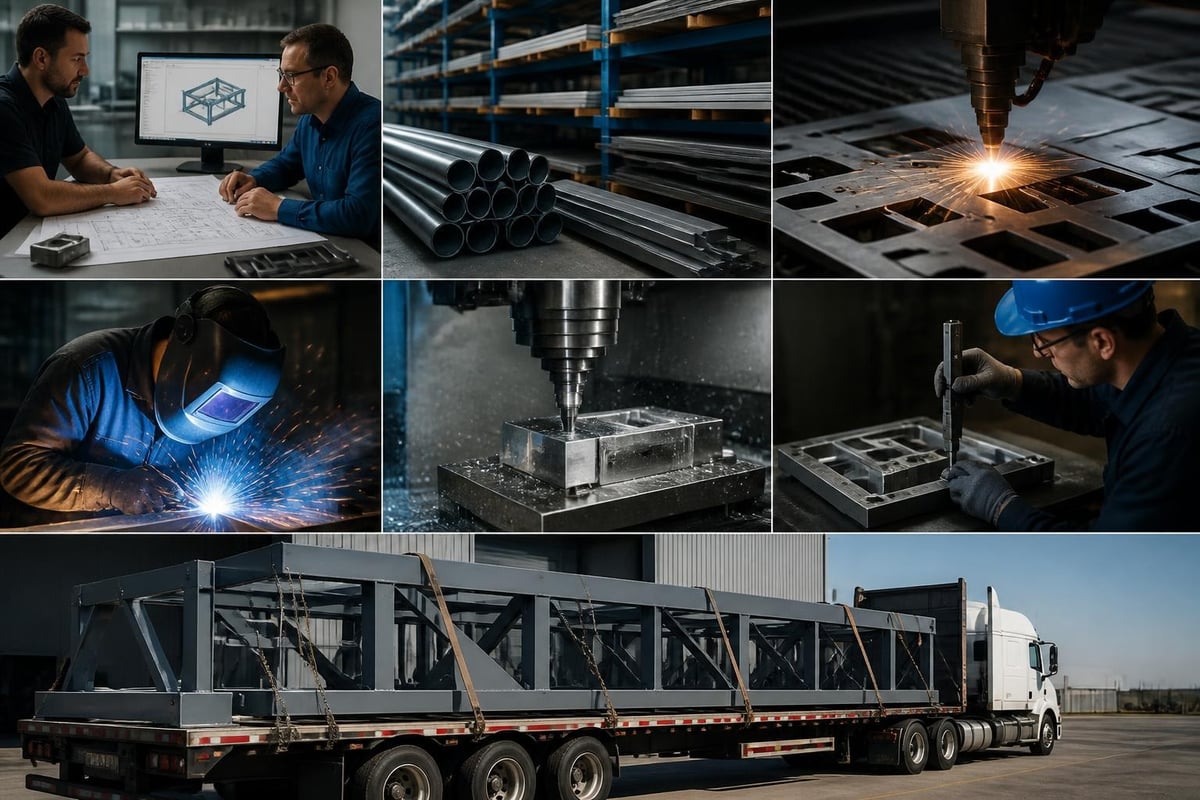
The best fabrication providers offer comprehensive services under one roof, eliminating the need to coordinate multiple vendors. These capabilities typically include:
- Metal cutting and shearing using laser, plasma, or waterjet technology
- CNC machining for precision parts and complex geometries
- Welding services covering MIG, TIG, stick, and specialized processes
- Assembly and finishing including powder coating, painting, and galvanizing
- Quality control and inspection with documented testing protocols
Field services expand a fabrication company's value proposition significantly. On-site welding, equipment repair, and emergency maintenance reduce downtime for industrial facilities that cannot afford to ship heavy equipment back and forth.
Technology Integration in 2026
Today's fabrication landscape relies heavily on computer-aided design (CAD) and computer-aided manufacturing (CAM) systems. These tools allow fabricators to translate engineering drawings into precise manufacturing instructions with minimal human error.
Progressive shops invest in automation where it makes sense. Robotic welding cells deliver consistent weld quality on high-volume production runs. Automated material handling systems reduce labor costs and workplace injuries. However, skilled craftspeople remain essential for custom work, complex assemblies, and projects requiring adaptive problem-solving.
| Technology Type | Primary Benefit | Best Application |
|---|---|---|
| CNC Machining | Tight tolerances (±0.001") | Precision components |
| Robotic Welding | Consistency and speed | Repetitive welding tasks |
| Waterjet Cutting | No heat-affected zone | Heat-sensitive materials |
| 3D Scanning | Reverse engineering | Legacy part reproduction |
The application of AI in manufacturing continues to evolve, with predictive maintenance and quality monitoring systems becoming more accessible to mid-sized fabrication shops.
Industry Standards That Matter
Adherence to recognized standards separates professional fabrication operations from fly-by-night shops. These standards protect client interests by ensuring consistent quality, safety, and regulatory compliance.
Critical Certifications and Compliance
Quality standards for fabrication shops encompass multiple frameworks depending on industry sector and application. ISO 9001 certification demonstrates commitment to quality management systems with documented procedures and continuous improvement.
For welding-intensive projects, American Welding Society (AWS) certification validates that welders possess the skills needed for specific applications. ASME certifications apply to pressure vessels and boiler work, where failure could result in catastrophic consequences.
Environmental and safety standards cannot be overlooked:
- OSHA compliance for worker safety and hazard mitigation
- ISO 14001 for environmental management systems
- Industry-specific requirements such as API standards for oil and gas equipment
- Materials certifications documenting chemical composition and mechanical properties
Understanding why industry standards matter helps businesses appreciate the value they receive when working with certified fabricators. Standards create accountability throughout the supply chain and provide recourse when problems arise.
Documentation and Traceability
Professional fabrication companies maintain detailed records linking each component to its material certificates, welding procedures, inspection reports, and operator qualifications. This documentation proves essential for regulated industries and provides protection if warranty issues emerge years after installation.
Traceability also supports continuous improvement initiatives. When a fabrication company analyzes defect patterns, material waste, or production bottlenecks, documented data enables targeted process refinements that benefit all customers.
Selecting the Right Partner for Your Project
Choosing a fabrication company requires evaluating multiple factors beyond price quotes. The lowest bid often proves most expensive when hidden costs, delays, and quality issues surface.
Geographic Considerations
Location impacts logistics costs, response times, and relationship building. A fabrication company based in Rifle, CO, for example, can efficiently serve clients throughout the Western United States while maintaining lower overhead than coastal metropolitan areas.
Local fabricators offer advantages for ongoing maintenance relationships. When equipment breaks down at a recycling facility or aggregate processing plant, having field technicians a few hours away rather than across the country minimizes production losses.
Capacity and Specialization Assessment
Not all fabrication shops handle all materials or project sizes equally well. Some specialize in lightweight aluminum and stainless steel work, while others focus on heavy structural steel fabrication. Understanding these specializations prevents mismatches.
Questions to ask during the selection process:
- What is your maximum part size and weight capacity?
- Which materials do you work with most frequently?
- Do you maintain inventory of common materials for quick-turn projects?
- What is your typical lead time for custom fabrication?
- Can you scale production up or down based on demand fluctuations?
The case study of Auger Fabrication’s 25% growth demonstrates how the right business systems enable fabrication companies to handle increasing complexity while maintaining quality standards.
Quality Control and Inspection Processes
A fabrication company's quality system determines whether finished products meet specifications consistently. Robust quality control catches problems before they leave the shop, preventing costly field failures.
Inspection Methodologies
Visual inspection catches obvious defects like weld spatter, dimensional errors, and surface imperfections. However, comprehensive quality programs employ advanced non-destructive testing (NDT) methods:
| NDT Method | What It Detects | Typical Applications |
|---|---|---|
| Ultrasonic Testing | Internal flaws, thickness measurement | Pressure vessels, structural welds |
| Magnetic Particle | Surface and near-surface cracks | Ferrous metals, critical welds |
| Dye Penetrant | Surface-breaking defects | Non-ferrous metals, welds |
| Radiographic | Internal porosity, inclusions | High-consequence welds |
Third-party inspection provides additional assurance for critical applications. Independent inspectors verify that fabrication meets contract specifications and applicable codes without the conflicts of interest inherent in self-inspection.
Statistical Process Control
Progressive fabrication companies use statistical methods to monitor production processes and identify trends before they result in out-of-specification parts. Control charts track dimensional measurements, material properties, and weld parameters over time.
This data-driven approach supports sustainable manufacturing practices by reducing scrap, optimizing material usage, and improving first-pass yield rates.
Custom Fabrication vs. Production Runs
Project requirements dictate whether custom one-off fabrication or production manufacturing makes economic sense. Each approach requires different capabilities from a fabrication company.
One-Off Custom Projects
Prototype development, replacement parts for obsolete equipment, and unique architectural features demand flexible fabrication capabilities. Skilled craftspeople interpret engineering drawings, adapt to design changes, and solve unforeseen challenges during fabrication.
Custom work typically involves:
- Direct collaboration between engineers and fabricators
- Multiple design iterations and test fits
- Specialized tooling or fixturing created for specific projects
- Higher per-unit costs justified by unique requirements
Field machining and welding services prove especially valuable for custom industrial applications where components must fit existing infrastructure precisely.
Production Manufacturing
When projects require dozens or hundreds of identical components, production-oriented fabrication delivers economies of scale. Setup costs get amortized across multiple units, reducing per-piece pricing.
Efficient production requires:
- Detailed process planning before first-piece fabrication
- Purpose-built fixtures and tooling for consistency
- Optimized material nesting to minimize waste
- Clear quality checkpoints at each manufacturing stage
- Inventory management systems tracking work-in-progress
The transformation achieved by Brookfield Fabricating illustrates how proper systems reduce inventory carrying costs while improving delivery performance.
Materials Expertise and Selection
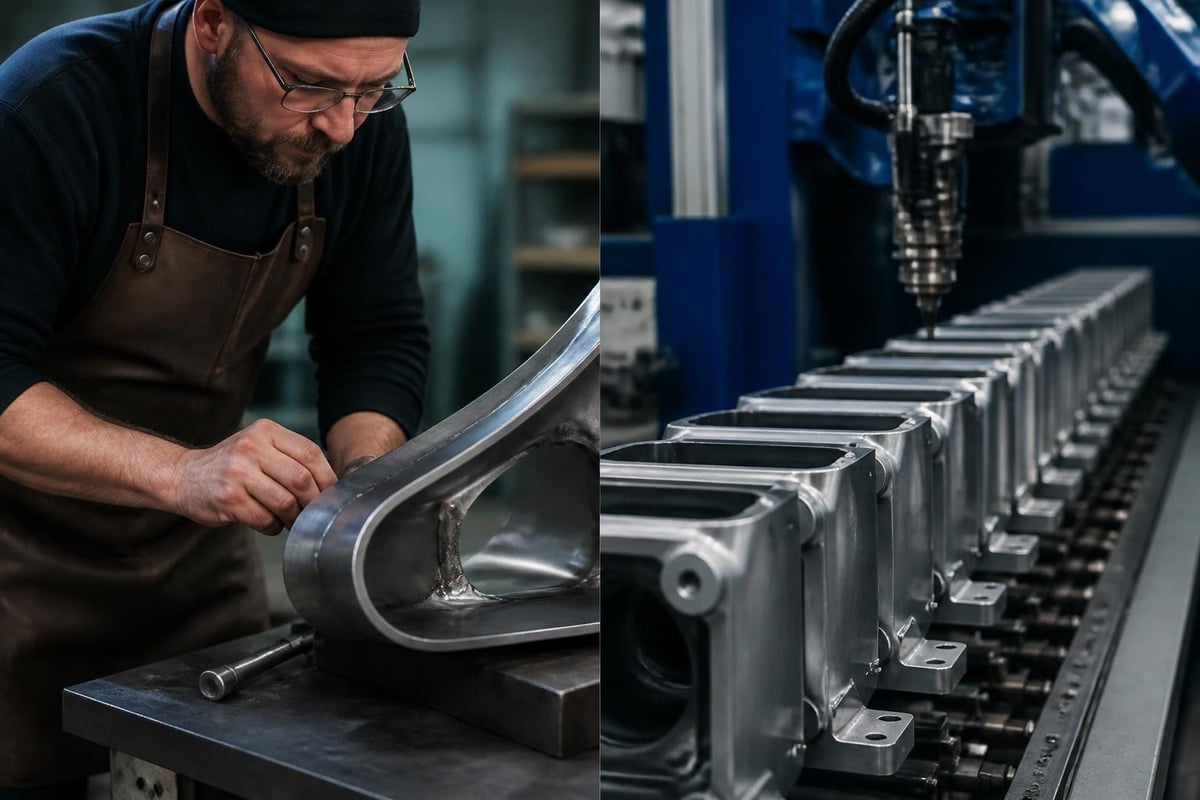
The materials a fabrication company works with regularly directly impact their ability to deliver quality results. Deep familiarity with material properties, welding characteristics, and machining behaviors separates expert fabricators from generalists.
Common Industrial Materials
- Carbon steel: Versatile, economical, widely available for structural and general fabrication
- Stainless steel: Corrosion resistance for food processing, chemical, and sanitary applications
- Aluminum: Lightweight strength for transportation and aerospace components
- High-strength alloys: Specialized materials for demanding environments and critical applications
Each material presents unique challenges. Aluminum requires different welding techniques than steel. Stainless steel demands careful handling to prevent contamination. High-strength alloys may need special heat treatment processes.
Material Sourcing and Certification
Reputable fabrication companies maintain relationships with certified material suppliers who provide mill test reports documenting chemical composition and mechanical properties. This traceability ensures that materials meet specifications for intended applications.
Some projects require specific material grades or manufacturers. A flexible fabrication company can source these requirements while maintaining project schedules, rather than forcing clients to use whatever happens to be in stock.
Value-Added Services That Differentiate Providers
Beyond basic cutting, welding, and machining, comprehensive fabrication companies offer services that streamline project management and reduce client coordination burdens.
Engineering and Design Support
Many clients have conceptual ideas but lack detailed manufacturing drawings. Fabrication shops with in-house engineering capabilities collaborate on design development, offering value engineering suggestions that improve manufacturability or reduce costs without compromising performance.
Design-for-manufacturing (DFM) reviews identify potential production challenges early. Simple design modifications specified before fabrication begins prevent expensive rework or compromised functionality.
Assembly and Integration
Complete assembly services transform individual fabricated components into finished systems ready for installation. This turnkey approach reduces field labor costs and accelerates project timelines.
Integration capabilities might include:
- Hydraulic systems assembly and testing
- Electrical component installation and wiring
- Pneumatic controls integration
- Complete skid-mounted equipment packages
Shops offering these services essentially function as general contractors for mechanical systems, managing multiple trades and ensuring compatibility between components.
Surface Treatment and Finishing
Protective coatings extend service life in corrosive environments. A fabrication company that coordinates powder coating, galvanizing, or specialized paint systems simplifies logistics and maintains single-source accountability for the complete product.
Industry-Specific Applications and Requirements
Different industrial sectors impose unique demands on fabrication services. Understanding these sector-specific requirements helps businesses find fabrication partners with relevant experience.
Oil and Gas Sector Fabrication
Energy industry projects often involve high pressures, extreme temperatures, and hazardous materials. Fabrication work must meet stringent safety and quality standards, with full materials traceability and documented welding procedures.
Common oil and gas fabrication includes:
- Pressure vessels and storage tanks
- Piping systems and manifolds
- Skid-mounted processing equipment
- Wellhead and production equipment components
Many energy projects occur in remote locations, making field fabrication and repair services essential for minimizing downtime.
Recycling and Waste Processing Equipment
Recycling facilities subject equipment to abrasive materials, impact loads, and continuous operation. Fabrication for this sector emphasizes durability, wear resistance, and maintainability.
Custom conveyors, sorting screens, baling equipment, and material handling systems require fabrication companies familiar with high-wear applications. Hardfacing, abrasion-resistant steel selection, and robust structural design extend equipment life in these demanding environments.
Aggregate and Mining Applications
Stone crushing, screening, and washing equipment operates under some of the most punishing conditions in industrial manufacturing. Heavy impact loads, constant vibration, and abrasive rock particles test fabrication quality relentlessly.
Fabricators serving this sector understand the importance of proper material selection, structural reinforcement, and field-serviceable designs that facilitate maintenance and part replacement.
Project Management and Communication
Technical capabilities mean little if a fabrication company cannot manage projects effectively and communicate clearly with clients. Professional project management prevents misunderstandings, tracks progress, and identifies problems early.
Transparent Quoting Processes
Detailed quotations break down costs by material, labor, finishing, and other elements. This transparency helps clients understand value and make informed decisions about scope modifications or material substitutions.
Rush charges, special tooling costs, and third-party services should appear separately rather than buried in inflated labor rates. Honest pricing builds trust and supports long-term relationships.
Progress Updates and Milestone Tracking
Regular communication keeps clients informed about fabrication status without requiring constant inquiries. Weekly updates work well for longer projects, while daily communication may be appropriate for time-sensitive work.
The economic forecasting approach used by Miller Fabrication Solutions demonstrates how strategic planning supports reliable delivery commitments even during market fluctuations.
Problem Resolution Protocols
Issues inevitably arise during complex fabrication projects. Material shortages, design ambiguities, or unexpected field conditions require prompt communication and collaborative problem-solving.
Professional fabrication companies bring problems to client attention immediately with proposed solutions rather than making assumptions or hoping issues resolve themselves. This proactive approach minimizes delays and prevents minor issues from becoming major failures.
Emergency Services and Field Support
Equipment breakdowns do not respect regular business hours. Industrial facilities running 24/7 operations need fabrication partners who provide emergency response capabilities when production-critical equipment fails.
Field welding services restore broken structures, repair damaged conveyors, and patch leaking vessels without the downtime required to remove equipment for shop repairs. Mobile machining brings precision cutting and boring capabilities directly to industrial sites.
Hydraulic repair services address cylinder failures, valve problems, and hose assemblies that keep material handling and processing equipment operational. Waterjet cutting provides cold-cutting capabilities for applications where heat could damage equipment or create safety hazards.
The best fabrication companies maintain field service vehicles equipped with tools, welding equipment, and common repair parts to minimize response times when clients face emergency situations.
Cost Considerations and Budgeting
Understanding fabrication pricing helps businesses budget accurately and evaluate quotes fairly. Multiple factors influence project costs beyond raw material and labor hours.
Pricing Structure Components
Material costs fluctuate with commodity markets. Steel prices in 2026 reflect global supply and demand dynamics, tariffs, and transportation costs. Reputable fabrication companies pass through current material costs rather than inflating these charges.
Labor rates vary by region, skill level, and certification requirements. A certified welder costs more per hour than general laborers, but delivers quality that prevents expensive rework.
| Cost Category | Typical Percentage of Total | Variable Factors |
|---|---|---|
| Materials | 40-60% | Market prices, material grade, quantity |
| Direct Labor | 25-35% | Complexity, certifications required |
| Overhead | 10-15% | Facility costs, equipment depreciation |
| Profit Margin | 10-15% | Market conditions, project risk |
Setup costs and tooling expenses get amortized differently for one-off custom work versus production runs. Understanding this distinction helps explain why per-unit pricing decreases as quantities increase.
Value vs. Price Evaluation
The cheapest fabrication quote rarely delivers the best value. Consider total cost of ownership including:
- Delivery reliability and on-time performance
- Quality and rework rates
- Warranty coverage and problem resolution
- Technical support and engineering assistance
- Payment terms and financial stability
A slightly higher-priced fabrication company that delivers on schedule with zero defects costs less than a budget shop requiring expensive rework and causing production delays.
Long-Term Partnership Benefits
Establishing ongoing relationships with a fabrication company creates advantages beyond individual project execution. Familiarity with client operations, equipment, and preferences streamlines future work.
Preferred customers often receive priority scheduling during capacity constraints. When a fabrication shop must choose between accommodating a new client's rush request or an established partner's project, long-standing relationships typically win.
Volume discounts and negotiated rates reward clients who provide consistent business. Framework agreements with established pricing for common services eliminate quoting cycles and accelerate project starts.
Knowledge transfer happens naturally over time. Fabricators working repeatedly with the same client develop deep understanding of quality expectations, preferred materials, and operational constraints. This institutional knowledge reduces errors and improves outcomes.
The rapid growth support provided to data center infrastructure manufacturers illustrates how fabrication partnerships enable clients to scale operations while maintaining quality standards.
Selecting a fabrication company involves evaluating technical capabilities, quality systems, industry experience, and partnership potential that extends beyond single transactions. The right provider brings expertise in metal fabrication, machining, and welding that helps commercial and industrial operations achieve their production goals while maintaining safety and quality standards. LTJ Industrial Services delivers comprehensive shop and field fabrication services throughout the Western United States, combining skilled craftsmanship with modern equipment to support recycling, aggregate, oil and gas, and general manufacturing clients. Whether you need custom fabrication, precision machining, emergency field repairs, or ongoing maintenance support, our team stands ready to help your operation succeed.