Selecting the right partner for industrial fabrication and metalworking projects requires understanding what separates exceptional service providers from the rest. The welding company landscape has evolved significantly in 2026, with operations expanding beyond basic welding to encompass comprehensive metal fabrication, precision machining, hydraulics, and specialized field services. For businesses in commercial and industrial manufacturing sectors throughout the Western United States, partnering with the welding company that offers integrated solutions has become critical to maintaining operational efficiency and meeting project deadlines.
What Defines the Welding Company in Modern Manufacturing
The welding company today operates as a multifaceted industrial services provider rather than a single-service specialist. Modern operations integrate multiple capabilities under one roof, enabling seamless project execution from initial design through final installation.
Core Service Categories
The welding company structure typically encompasses several interconnected service areas:
- Custom Welding Services: MIG, TIG, stick welding, and specialized processes for diverse materials
- Metal Fabrication: Structural steel, sheet metal, and custom component manufacturing
- Precision Machining: CNC operations, turning, milling, and grinding services
- Field Services: On-site welding, repairs, and emergency maintenance
- Hydraulic Systems: Design, installation, and repair of hydraulic equipment
- Water Jetting: High-pressure cutting and surface preparation
This integrated approach allows the welding company to serve as a single point of contact for complex industrial projects. Rather than coordinating multiple contractors, businesses can streamline operations through one trusted partner.
Industry Specialization Matters
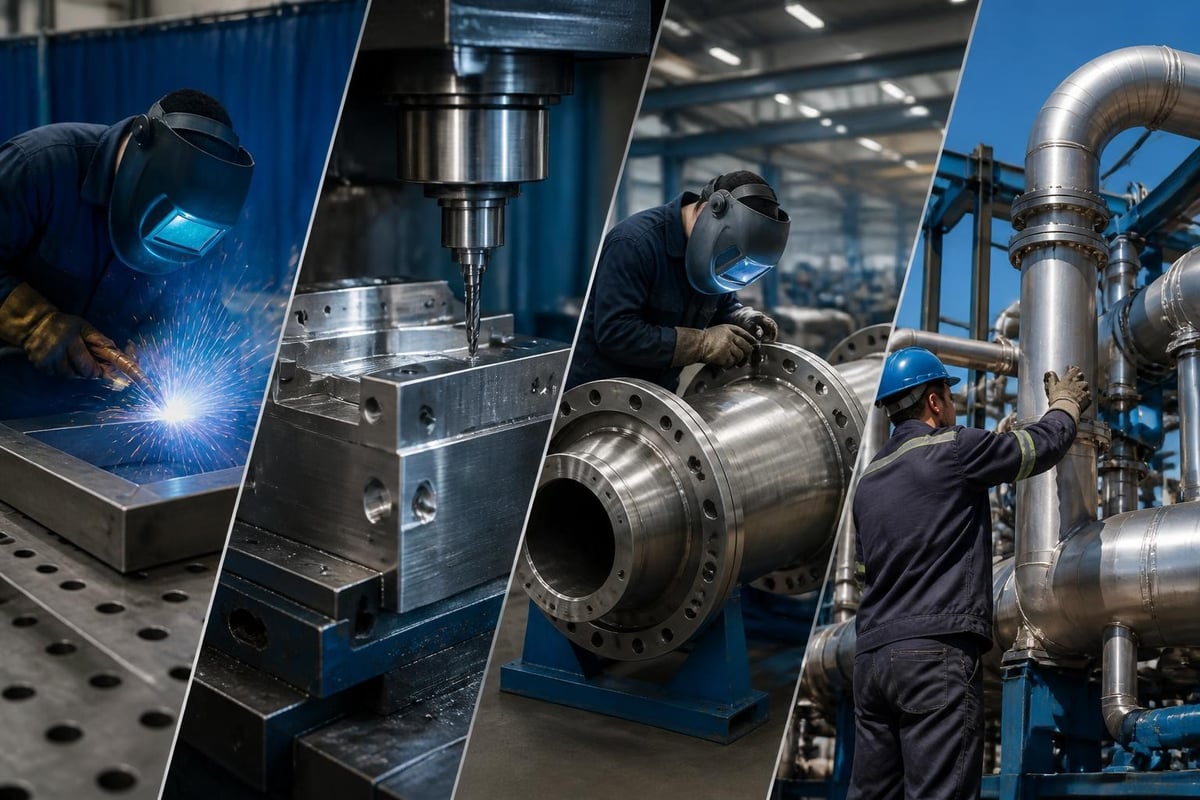
The welding company that excels in 2026 demonstrates deep expertise in specific industrial sectors. Specialization enables better understanding of unique challenges, regulatory requirements, and performance standards.
Key industries served include:
- Oil & Gas: Pipeline systems, pressure vessels, and extraction equipment
- Aggregate & Mining: Conveyor systems, crushers, and screening equipment
- Recycling Operations: Material handling systems and processing equipment
- Commercial Manufacturing: Production equipment and facility infrastructure
According to the American Welding Society’s analysis of future welding trends, industry-specific knowledge combined with advanced technology adoption defines competitive advantage in the welding sector.
Quality Standards and Certifications
The welding company operating at the highest level maintains rigorous quality standards and relevant certifications. These credentials provide assurance that work meets or exceeds industry requirements.
Essential Certifications
| Certification Type | Purpose | Industries Requiring |
|---|---|---|
| AWS Certified Welders | Validates welder skill levels | All manufacturing sectors |
| ASME Compliance | Pressure vessel standards | Oil & gas, chemical processing |
| API Certifications | Petroleum industry standards | Energy sector operations |
| ISO 9001 | Quality management systems | Commercial manufacturing |
Beyond certifications, the welding company must demonstrate consistent quality through documented processes, material traceability, and comprehensive testing procedures. Non-destructive testing (NDT) capabilities including ultrasonic, radiographic, and magnetic particle inspection separate professional operations from basic service providers.
Safety Compliance
Safety represents a non-negotiable priority. The welding company adheres to OSHA welding, cutting, and brazing standards while implementing additional protective measures tailored to specific work environments.
Safety protocols include:
- Comprehensive hazard assessments before project initiation
- Proper ventilation and fume extraction systems
- Personal protective equipment requirements and enforcement
- Regular safety training and certification updates
- Emergency response procedures for field operations
The CSA W117.2 safety standard 2025 edition provides updated guidelines that forward-thinking welding companies have already implemented.
Technology Integration and Innovation
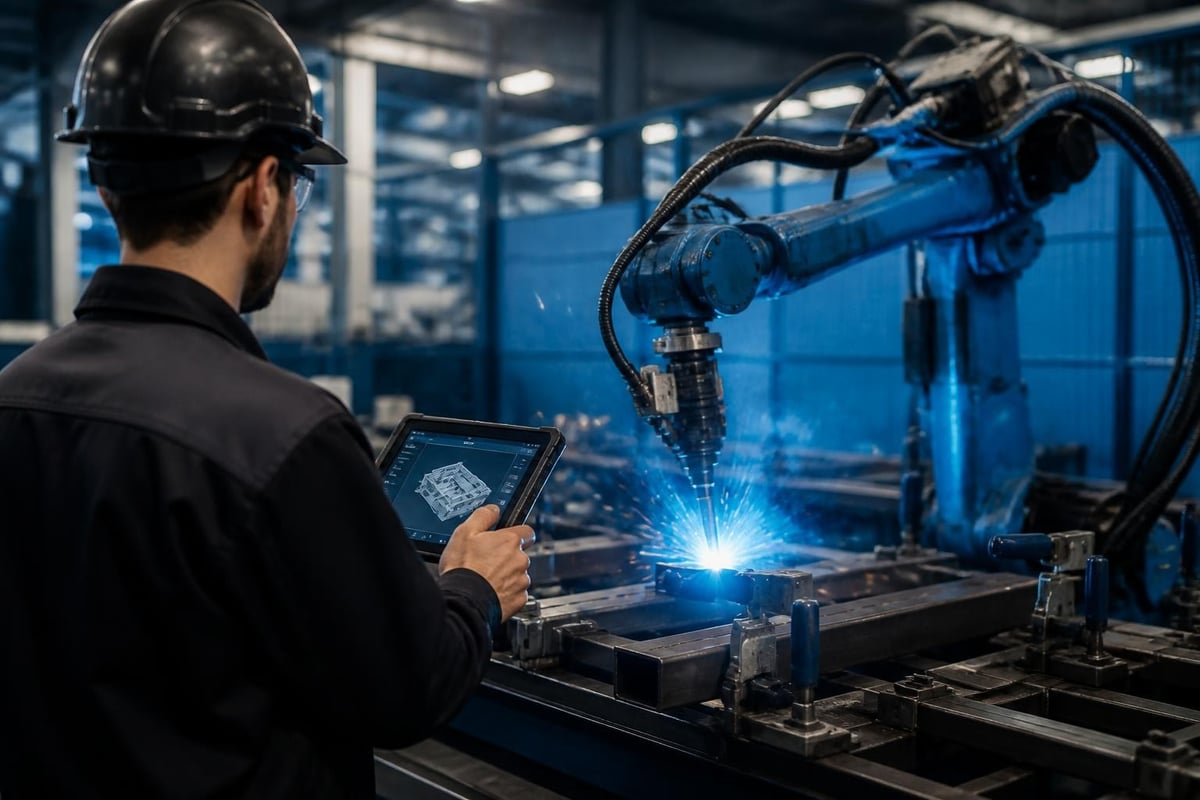
The welding company landscape in 2026 reflects significant technological advancement. Automation, data analytics, and artificial intelligence now play crucial roles in improving efficiency and quality.
Advanced Welding Technologies
Modern operations incorporate:
- Robotic Welding Systems: Automated processes for high-volume, repeatable welds
- Orbital Welding: Precision pipe welding for critical applications
- Laser Welding: High-speed joining for thin materials
- Friction Stir Welding: Solid-state process for aluminum and dissimilar metals
Research into adaptive welding defect detection frameworks demonstrates how AI enhances quality control. The welding company that embraces these innovations delivers superior consistency while reducing rework and project timelines.
Digital Process Management
Beyond welding equipment, the welding company benefits from digital transformation in project management:
- CAD/CAM Integration: Seamless design-to-fabrication workflows
- Real-Time Project Tracking: Customer visibility into progress
- Inventory Management Systems: Material availability and cost control
- Predictive Maintenance: Equipment reliability and uptime optimization
Studies on physics-informed neural networks in welding quality prediction highlight how data-driven approaches improve process efficiency and outcome consistency.
Field Services vs. Shop Capabilities
The welding company must balance shop-based fabrication with field service capabilities. Each approach offers distinct advantages depending on project requirements.
Shop-Based Advantages
Controlled environments provide optimal conditions for precision work:
- Climate-controlled conditions for consistent weld quality
- Access to full range of equipment and tooling
- Efficient workflow and material handling systems
- Comprehensive quality inspection capabilities
- Lower hourly rates compared to field services
Complex fabrication projects requiring tight tolerances benefit from shop environments where the welding company controls every variable.
Field Service Capabilities
On-site work becomes necessary when:
- Equipment cannot be transported to shop facilities
- Downtime minimization requires immediate response
- Installation must occur at final location
- Emergency repairs demand rapid mobilization
| Service Type | Best Applications | Typical Timeline |
|---|---|---|
| Shop Fabrication | New equipment, complex assemblies | Days to weeks |
| Field Welding | Structural repairs, pipeline work | Hours to days |
| Emergency Response | Equipment failures, safety issues | Immediate |
The welding company equipped for both environments provides maximum flexibility. Mobile welding rigs, portable machining equipment, and cross-trained technicians enable responsive service across the Western United States.
Material Expertise and Versatility
Different industries demand expertise with various base materials and alloy specifications. The welding company serves diverse sectors by maintaining broad material capabilities.
Common Materials and Applications
Carbon Steel: Standard structural applications, general fabrication, and most industrial equipment. Readily weldable with multiple processes and cost-effective for high-volume projects.
Stainless Steel: Corrosion-resistant applications in food processing, chemical handling, and environments requiring hygiene or longevity. Requires specialized techniques to maintain properties.
Aluminum: Lightweight structures, marine applications, and specialized equipment. Demands specific welding processes and careful heat management.
Specialty Alloys: High-temperature applications, chemical resistance, and extreme environments. Includes Inconel, Hastelloy, and other exotic materials requiring advanced expertise.
Material selection impacts project success as significantly as welding quality. The welding company provides guidance on optimal material specifications based on operating conditions, lifecycle costs, and performance requirements.
Project Management and Client Collaboration
Technical expertise alone does not define exceptional service. The welding company distinguishes itself through project management capabilities and communication practices.
Collaborative Planning Process
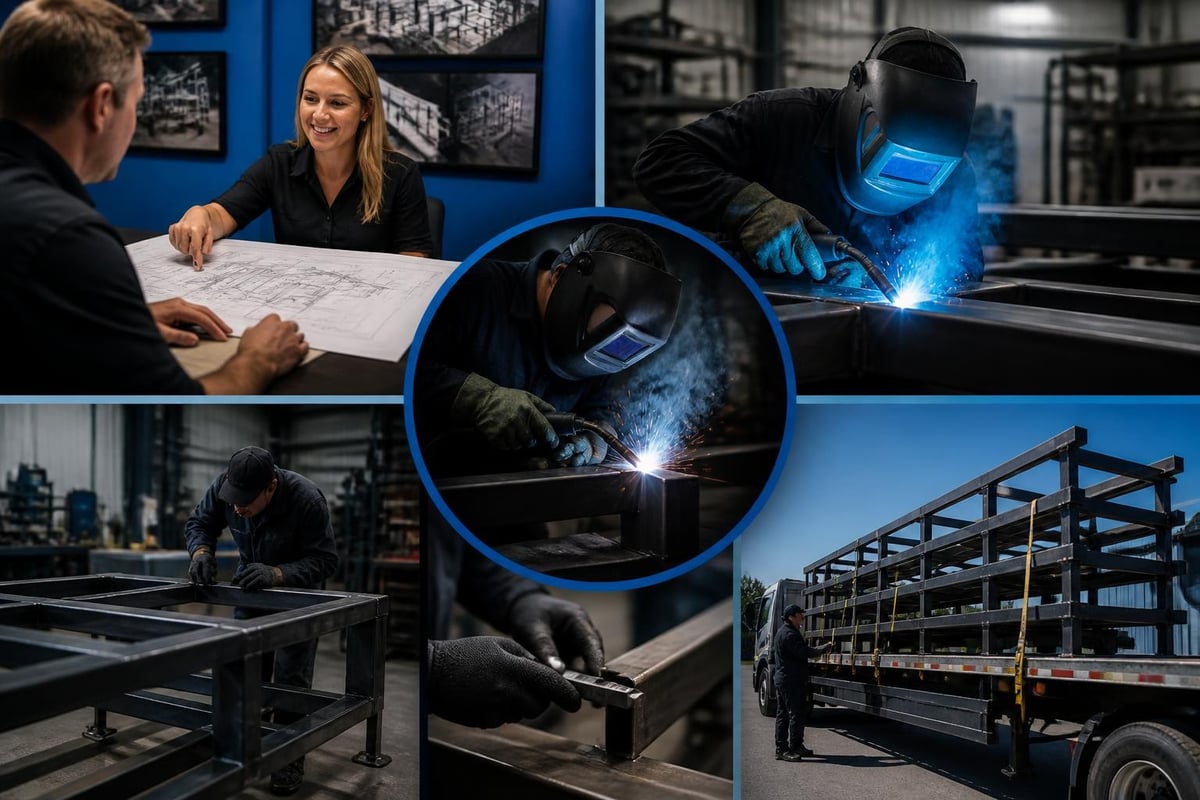
Successful projects begin with comprehensive planning:
- Initial consultation to understand objectives and constraints
- Site assessment for field work or logistics planning
- Material specification and sourcing strategies
- Timeline development with milestone identification
- Budget estimation with transparent pricing
Early collaboration prevents costly mid-project changes and ensures alignment between client expectations and deliverable outcomes.
Communication Standards
Throughout project execution, the welding company maintains regular communication:
- Progress Updates: Scheduled reporting on milestones and timeline adherence
- Issue Resolution: Proactive identification and solutions for challenges
- Change Management: Documented processes for scope adjustments
- Quality Documentation: Inspection reports, certifications, and test results
The three priorities for building welding industry resilience and efficiency emphasize process improvement and technology integration-areas where strong client collaboration drives optimal results.
Workforce Development and Expertise
The welding company's capabilities ultimately depend on skilled personnel. Workforce quality separates exceptional providers from commodity services.
Training and Certification Programs
Leading operations invest continuously in workforce development:
- Apprenticeship programs for new welders and machinists
- Advanced certification courses for specialized processes
- Cross-training initiatives to build versatile capabilities
- Safety training beyond minimum regulatory requirements
- Technology adoption training for new equipment and systems
Certified welders represent the foundation, but the welding company also requires skilled fabricators, machinists, project managers, and quality inspectors working as integrated teams.
Experience in Diverse Applications
Years in operation provide valuable perspective, but breadth of experience matters equally. The welding company that has tackled diverse projects across multiple industries brings problem-solving capabilities that narrow specialists cannot match.
Research exploring AI assessment of weld acceptability highlights the complexity of welding evaluation-knowledge that experienced professionals develop through years of hands-on work across varying conditions and requirements.
Geographic Coverage and Response Capabilities
For businesses operating across the Western United States, the welding company's geographic reach and response capabilities significantly impact project feasibility and timeline management.
Service Area Considerations
The ideal welding company offers:
- Strategic Location: Positioned to serve key industrial regions efficiently
- Mobile Capabilities: Equipped for field service across wide geographic areas
- Regional Knowledge: Familiar with local regulations, permitting, and conditions
- Logistics Management: Efficient transportation for equipment and materials
- Emergency Response: Rapid mobilization for critical repairs
Companies based in central locations like Colorado's Western Slope can effectively serve operations throughout mountain states and western regions while maintaining reasonable response times.
Multi-Site Project Coordination
Large organizations often require consistent service across multiple facilities. The welding company capable of managing multi-site projects provides:
- Standardized procedures ensuring consistency
- Centralized project management and reporting
- Volume-based pricing advantages
- Coordinated scheduling to minimize operational disruption
Cost Considerations and Value Proposition
Price represents one factor in provider selection, but focusing solely on lowest cost often results in poor outcomes. The welding company delivers value through quality, reliability, and total project cost optimization.
True Cost Analysis
| Cost Factor | Low-Cost Provider | Quality-Focused Company |
|---|---|---|
| Initial Quote | Lower | Moderate to higher |
| Rework Requirements | Common | Rare |
| Project Timeline | Often extended | Reliably met |
| Material Waste | Higher | Minimized |
| Total Project Cost | Often higher | Optimized |
The welding company that invests in quality equipment, skilled personnel, and rigorous processes delivers better total value despite potentially higher hourly rates.
Long-Term Partnership Benefits
Establishing ongoing relationships with the welding company provides advantages beyond individual projects:
- Priority scheduling during high-demand periods
- Volume pricing on recurring work
- Proactive maintenance recommendations
- Equipment lifecycle planning and optimization
- Faster response for emergency situations
Specialized Services That Add Value
Beyond core welding and fabrication, the welding company differentiates through specialized capabilities that solve specific challenges.
Water Jetting Applications
High-pressure water jetting serves multiple purposes:
- Surface Preparation: Coating removal and cleaning for welding or painting
- Precision Cutting: Clean cuts without heat-affected zones
- Equipment Cleaning: Industrial equipment maintenance and restoration
- Concrete Removal: Selective demolition and surface preparation
This capability eliminates the need for additional contractors on projects requiring surface preparation or specialty cutting.
Hydraulic System Services
Industrial operations depend heavily on hydraulic systems. The welding company with hydraulic expertise provides:
- System design and engineering
- Component fabrication and installation
- Hose assembly and replacement
- Troubleshooting and repair
- Preventive maintenance programs
Integrated hydraulic services reduce downtime by addressing multiple system needs through one provider.
Custom Engineering Solutions
Standard catalog components don't always meet specific operational requirements. The welding company offers custom engineering for unique challenges:
- Problem Assessment: Understanding operational constraints and objectives
- Design Development: Creating solutions tailored to specific needs
- Prototype Fabrication: Testing concepts before full production
- Production: Manufacturing custom components to exact specifications
- Installation Support: Ensuring proper integration with existing systems
Quality Control and Inspection Protocols
The welding company maintains reputation through consistent quality delivery. Comprehensive inspection protocols verify that every project meets specifications.
Multi-Stage Inspection Process
Quality verification occurs throughout fabrication:
- Material Inspection: Verification of specifications and certifications upon receipt
- In-Process Inspection: Monitoring during fabrication to catch issues early
- Weld Inspection: Visual and non-destructive testing of critical joints
- Dimensional Verification: Confirming tolerances meet drawings
- Final Inspection: Comprehensive review before delivery
Documentation provides traceability and supports warranty claims if issues arise post-delivery.
Non-Destructive Testing Methods
Critical applications require verification beyond visual inspection:
- Ultrasonic Testing (UT): Detecting internal flaws and measuring material thickness
- Radiographic Testing (RT): X-ray or gamma ray inspection of weld integrity
- Magnetic Particle Testing (MT): Revealing surface and near-surface discontinuities
- Liquid Penetrant Testing (PT): Identifying surface-breaking defects
- Pressure Testing: Verifying vessel and piping system integrity
The welding company equipped with comprehensive NDT capabilities provides assurance for applications where failure could result in safety hazards or significant economic loss.
Industry-Specific Applications and Requirements
Different sectors impose unique demands on the welding company. Understanding these variations ensures appropriate service selection.
Oil & Gas Sector
Energy industry applications require:
- API compliance for pipeline and pressure vessel work
- Specialized materials for sour gas service
- Precise heat treatment procedures
- Comprehensive documentation and traceability
- Emergency response capabilities for production interruptions
The welding company serving oil and gas operations must navigate complex regulatory environments while maintaining rapid response capabilities.
Aggregate and Mining Operations
Heavy equipment and harsh conditions characterize this sector:
- Abrasion-resistant materials and hardfacing applications
- Structural repairs on crushers, screens, and conveyors
- Field welding in remote locations
- Robust fabrication to withstand impact and vibration
- Scheduled maintenance coordination around production cycles
Recycling Industry
Material handling and processing equipment face unique stresses:
- Heavy-duty fabrication for material sorting systems
- Conveyor modifications and repairs
- Baler and compactor maintenance
- Custom equipment for specialized processing needs
- Wear plate installation and replacement
The welding company familiar with recycling operations understands equipment lifecycles and can recommend preventive measures that extend component longevity.
Selecting the welding company for your industrial fabrication, machining, and field service needs requires evaluating technical capabilities, industry experience, quality standards, and responsiveness. The comprehensive approach integrating shop fabrication with field services, backed by certified expertise and modern technology, delivers the reliability that commercial and industrial operations demand. When your projects require precision welding, custom fabrication, or emergency field services across the Western United States, LTJ Industrial Services combines decades of experience serving oil & gas, aggregate, recycling, and manufacturing sectors with the integrated capabilities and responsive service that keep your operations running efficiently.