
In industrial welding and fabrication, the difference between a strong, reliable weld and a catastrophic failure often comes down to proper documentation and standardized procedures. A WPS welding procedure serves as the foundation for consistent, high-quality welding operations across manufacturing sectors, from oil and gas installations to aggregate processing equipment. Whether you're managing a fabrication shop in the Western United States or overseeing field welding operations, understanding how to develop, implement, and maintain welding procedure specifications is critical for operational success and regulatory compliance.
Understanding the WPS Welding Procedure Framework
A Welding Procedure Specification (WPS) is a formal written document that provides detailed instructions for welders to follow when joining specific materials under particular conditions. This comprehensive blueprint outlines every critical variable affecting the welding process, from base metal specifications to post-weld heat treatment requirements.
The wps welding procedure document serves multiple essential functions within industrial operations:
- Quality assurance: Ensures every weld meets the same standards regardless of which certified welder performs the work
- Regulatory compliance: Satisfies requirements from governing bodies such as ASME, AWS, and API
- Risk mitigation: Reduces the likelihood of weld failures that could lead to equipment damage, production shutdowns, or safety incidents
- Training standardization: Provides a consistent reference for welder qualification and ongoing skill development
- Legal protection: Creates documented evidence of proper procedures in case of disputes or investigations
Core Components of a WPS Welding Procedure
Every effective wps welding procedure contains specific elements that must be clearly defined and properly documented. These components work together to create a complete roadmap for successful welding operations.
| WPS Component | Description | Critical Parameters |
|---|---|---|
| Base Materials | Metals being joined | Material type, thickness, P-number, group number |
| Filler Materials | Consumables used | Electrode classification, F-number, A-number |
| Welding Process | Method employed | SMAW, GMAW, GTAW, FCAW, SAW specifications |
| Joint Design | Configuration details | Groove type, angle, root opening, backing |
| Electrical Parameters | Power settings | Current, voltage, polarity, travel speed |
| Preheat/Interpass | Temperature control | Minimum and maximum temperatures |
| Post-Weld Treatment | Heat treatment requirements | Temperature ranges, hold times, cooling rates |
The electrical parameters section deserves particular attention because precise control of current, voltage, and travel speed directly impacts penetration depth, bead profile, and overall weld integrity. In industries like oil and gas where pipeline failures can have devastating consequences, these specifications cannot be approximated or left to individual interpretation.
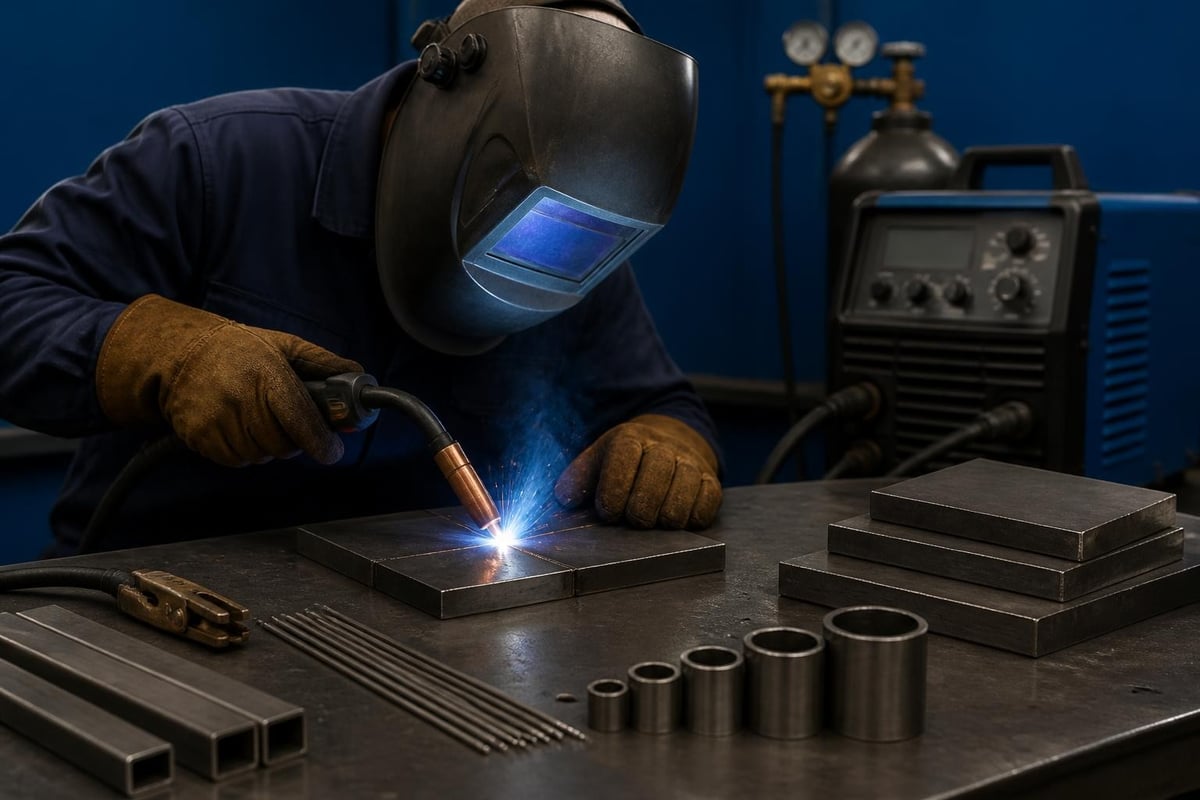
Developing and Qualifying Your Welding Procedures
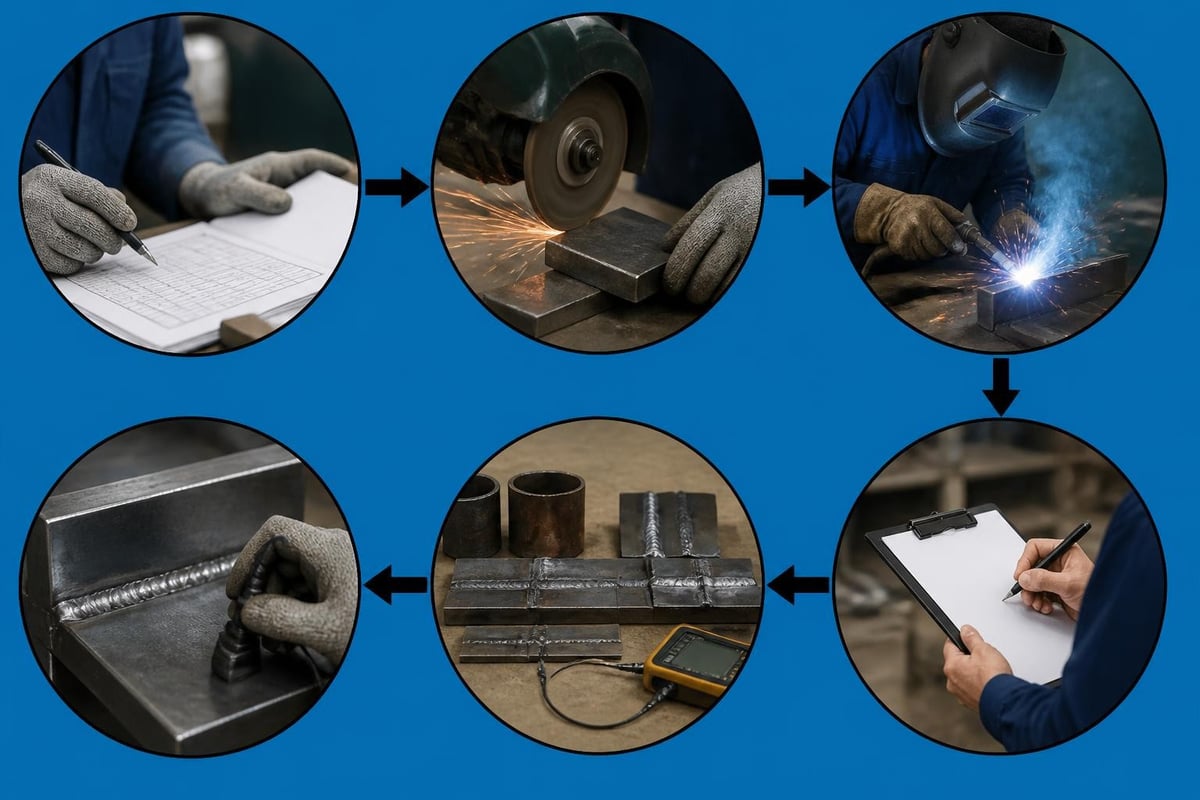
Creating a qualified wps welding procedure requires systematic testing and documentation through the Procedure Qualification Record (PQR) process. This qualification ensures that the proposed welding parameters will consistently produce sound welds that meet applicable code requirements.
The PQR Development Process
The Procedure Qualification Record documents actual welding parameters used during testing and the mechanical properties achieved. This record provides the technical foundation supporting your WPS.
- Identify applicable codes and standards: Determine which industry codes govern your specific application (ASME Section IX, AWS D1.1, API 1104, etc.)
- Establish essential variables: Define all parameters that will affect the mechanical properties of the weld
- Conduct test welds: Create sample welds following the proposed procedure under controlled conditions
- Perform destructive testing: Subject samples to tensile tests, bend tests, impact tests, and macro examinations
- Document results: Record actual welding parameters used and all test results in the PQR
- Review and certify: Have a qualified welding engineer review and certify that results meet code requirements
Essential Variables and Their Impact
Understanding which variables are "essential" versus "nonessential" is crucial when developing or modifying a wps welding procedure. Essential variables directly affect the mechanical properties of the weld, and any change to these variables requires requalification.
Essential variables include:
- Base metal thickness increases beyond qualified range
- Changes in P-number (base metal grouping)
- Welding process changes (switching from GMAW to GTAW)
- Filler metal classification changes
- Preheat or interpass temperature reductions below qualified minimum
- Post-weld heat treatment elimination or parameter changes
When field conditions in recycling facilities or aggregate operations require procedure adjustments, welding supervisors must understand whether the proposed change affects an essential variable. Making unauthorized changes to essential variables without requalification can void warranties, violate code requirements, and create serious liability exposure.
The API guidance on auditing welding processes provides valuable insights into verifying that WPS and PQR documentation meets industry standards, particularly for pressure vessel and pipeline applications common in the oil and gas sector.
Implementing WPS Welding Procedures in Shop and Field Operations
Documentation excellence means nothing without effective implementation. Translating paper procedures into consistent shop floor and field site execution requires systematic approaches to welder qualification, procedure accessibility, and ongoing compliance monitoring.
Welder Qualification and Certification
Each welder must be qualified to work within the specific parameters of your wps welding procedure. This qualification, documented in a Welder Performance Qualification (WPQ), demonstrates that the individual can produce acceptable welds following the WPS.
The qualification process involves:
- Welding test coupons according to a qualified WPS under observation
- Visual inspection of completed test welds
- Destructive or non-destructive testing as required by applicable codes
- Documentation of results in the WPQ record
- Periodic requalification per code requirements (typically every six months if not actively welding)
In field environments throughout the Western United States, from Colorado plateau operations to desert installations, welders may encounter conditions that test their ability to maintain procedural compliance. Wind, temperature extremes, and positional challenges require that qualified welders understand not just the "how" but the "why" behind each WPS parameter.
Making Procedures Accessible and Understandable
A comprehensive wps welding procedure delivers no value if welders cannot easily access or understand it. Industrial fabrication shops and field service operations must implement systems ensuring procedures are:
Readily available at point of use through physical copies at welding stations, digital access via tablets or mobile devices, or posted procedures in work areas
Clearly written using language appropriate to the welder's education level, including visual aids and diagrams where helpful, and avoiding unnecessarily complex technical jargon
Properly identified with unique WPS numbers, clear material and process identification, and revision control tracking
Regularly reviewed with welders during pre-job briefings, safety meetings, and periodic refresher training sessions
For companies like LTJ Industrial Services serving diverse industries across the Western United States, maintaining current WPS libraries covering everything from structural steel fabrication to pressure vessel repair represents a significant but necessary investment in quality and safety.
Quality Control and Inspection Requirements
The wps welding procedure establishes not only how to weld but also how to verify that welds meet acceptance criteria. Inspection requirements must be clearly specified within the WPS or referenced companion documents.
Visual Inspection Criteria
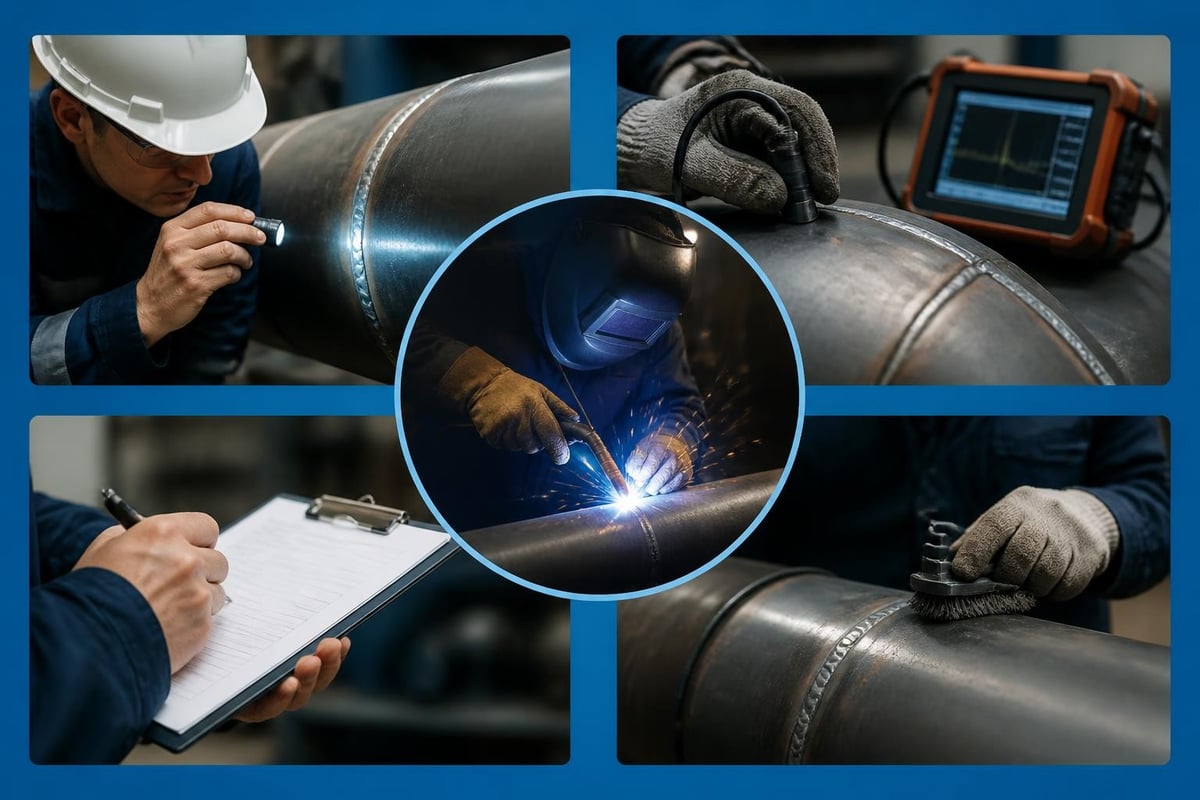
Visual inspection represents the first line of quality control for every weld. The WPS should specify acceptance criteria for:
- Weld size and profile dimensions
- Surface defects (cracks, porosity, undercut, overlap)
- Weld reinforcement limits
- Tie-in quality at start and stop points
| Defect Type | Typical Rejection Criteria | Repair Method |
|---|---|---|
| Linear cracks | Any crack of any size | Complete removal, re-weld |
| Porosity | Clustered pores >1/4" diameter | Grind out, re-weld affected area |
| Undercut | Depth >1/32" or >10% thickness | Fill pass, blend to base metal |
| Incomplete fusion | Any lack of fusion detected | Remove to sound metal, re-weld |
Non-Destructive Testing Integration
Beyond visual inspection, many applications require non-destructive testing (NDT) to verify internal weld quality. The wps welding procedure should specify:
- Required NDT methods (radiographic, ultrasonic, magnetic particle, liquid penetrant)
- Testing extent (100% inspection versus sampling)
- Acceptance standards
- Timing of testing (concurrent with fabrication versus final inspection)
In pressure vessel fabrication for the oil and gas industry, radiographic testing often represents a code-mandated requirement. For structural welding in aggregate processing equipment, ultrasonic testing might be specified for critical load-bearing connections while visual inspection suffices for secondary members.
Industry-Specific WPS Applications and Considerations
Different industrial sectors impose unique requirements on welding procedures. Understanding these industry-specific considerations ensures your wps welding procedure addresses relevant codes, environmental factors, and operational demands.
Oil and Gas Sector Requirements
Pipeline construction and facility fabrication in the oil and gas industry operate under stringent regulatory oversight. WPS development must address:
API 1104 compliance for pipeline welding, including specific requirements for tension testing, bend testing, and radiographic examination acceptance criteria
Sour service considerations when welding equipment exposed to H2S environments, requiring special attention to hardness control and material selection
High-pressure applications where precise control of heat input prevents microstructural changes that could compromise pressure containment
Field construction challenges including environmental protection, wind breaks, preheat maintenance in cold weather, and power supply limitations
Aggregate and Recycling Equipment Fabrication
Welding procedures for material handling equipment face different but equally demanding requirements:
- Abrasion resistance needs: Selecting filler metals that build up hardness without sacrificing toughness
- High-cycle fatigue: Designing joint configurations and welding parameters that minimize stress concentrations
- Mixed material welding: Addressing dissimilar metal joining (manganese steel to mild steel, AR plate to structural members)
- Repair welding protocols: Developing procedures for in-situ repairs that account for unknown base metal history
Structural Steel and Architectural Applications
Commercial and industrial construction welding emphasizes different priorities:
- AWS D1.1 Structural Welding Code compliance governing building frameworks, bridges, and support structures
- Prequalified WPS options allowing use of standard procedures without testing for common configurations
- Weld size optimization balancing strength requirements against cost and distortion control
- Seismic design considerations requiring specific toughness properties and complete joint penetration welds in critical zones
Manufacturing facilities throughout the Western United States often require structural modifications to accommodate new equipment or process changes. Having qualified wps welding procedure documentation for common structural configurations enables rapid, compliant execution of these modifications.
Documentation Management and Revision Control
Maintaining current, accessible WPS documentation requires systematic document management practices. As materials, processes, and code requirements evolve, your procedure library must keep pace through effective revision control.
Essential Documentation Practices
Unique identification systems: Assign each WPS a unique number incorporating relevant information (material type, process, position, etc.)
Revision tracking: Document every change with revision numbers, dates, and descriptions of modifications
Distribution control: Maintain records of where controlled copies are distributed and ensure superseded versions are removed from use
Supporting documentation: Link each WPS to its supporting PQR(s) and maintain records of all qualified welders for each procedure
Audit trail maintenance: Preserve historical versions for reference during warranty claims, failure investigations, or code compliance audits
Digital Transformation Opportunities
Modern fabrication operations increasingly leverage digital tools for WPS management:
- Cloud-based document management systems providing anywhere access for field crews
- QR codes on procedure cards linking to full documentation and video demonstrations
- Digital capture of actual welding parameters for automatic compliance verification
- Integration with ERP systems for job-specific procedure assignment and tracking
For multi-location operations spanning the Western United States, digital systems ensure consistent procedure access whether welders are working in a climate-controlled shop or at a remote field site.
Training and Competency Development
The most perfectly written wps welding procedure delivers inconsistent results if welders lack the knowledge and skills to execute it properly. Ongoing training programs ensure welding personnel understand both the technical requirements and the quality expectations embedded in each procedure.
Effective Training Program Elements
Initial procedure familiarization when new WPS documents are introduced, covering parameter rationale, critical variables, and quality expectations
Hands-on practice sessions allowing welders to develop muscle memory and technique refinement before production work
Mock-up welding on scrap materials matching production configurations, particularly for unusual positions or difficult joint access
Refresher training for procedures used infrequently or after extended periods without performing specific weld types
Root cause analysis participation involving welders in investigating defects to build understanding of cause-effect relationships
Building a Culture of Procedural Compliance
Technical competency alone doesn't guarantee consistent WPS adherence. Organizational culture significantly influences whether welders view procedures as helpful guidance or bureaucratic obstacles.
Companies that successfully maintain high compliance rates typically:
- Involve experienced welders in procedure development, leveraging their practical insights
- Explain the safety and quality rationale behind requirements rather than imposing arbitrary rules
- Provide adequate time and resources for proper setup and execution
- Recognize and reward quality workmanship and procedural adherence
- Address non-compliance through coaching and retraining rather than purely punitive approaches
- Maintain open communication channels for welders to raise concerns about impractical or unclear requirements
In competitive industrial markets across Colorado and the broader Western region, reputation for quality execution drives business success. That reputation ultimately rests on consistent application of sound welding procedures by skilled, motivated craftspeople.
Common WPS Challenges and Solutions
Even well-documented procedures encounter implementation challenges. Recognizing common problems and their solutions helps maintain quality while avoiding costly rework or dangerous failures.
Challenge 1: Parameter Drift
Problem: Welders gradually deviate from specified parameters, often unconsciously adjusting amperage or travel speed based on personal preference or habit.
Solution: Implement parameter monitoring through periodic measurements with calibrated instruments, pre-weld checklists requiring welder verification of settings, and random inspections documenting actual versus specified parameters.
Challenge 2: Environmental Non-Compliance
Problem: Field conditions (wind, temperature, moisture) prevent meeting WPS environmental requirements like minimum preheat or maximum wind speed.
Solution: Develop alternative procedures qualified for adverse conditions, provide environmental controls (wind breaks, heating equipment, moisture protection), or implement hold points requiring supervisor approval to proceed.
Challenge 3: Consumable Substitution
Problem: Specified filler materials are unavailable, prompting unauthorized substitution with "similar" products that may not be qualified.
Solution: Maintain adequate inventory of qualified consumables, establish approved substitution protocols with engineering review, and implement strict inventory control preventing non-qualified materials from reaching welding stations.
| Problem Area | Root Causes | Preventive Measures |
|---|---|---|
| Porosity defects | Contaminated base metal, wind exposure, improper shielding gas | Surface preparation procedures, environmental controls, gas flow verification |
| Cracking issues | Excessive restraint, improper preheat, hydrogen absorption | Joint design optimization, preheat verification, low-hydrogen practices |
| Distortion problems | Excessive heat input, poor fixturing, welding sequence errors | Heat input limits in WPS, detailed assembly drawings, sequential welding diagrams |
Proper wps welding procedure development, qualification, and implementation form the cornerstone of reliable industrial fabrication operations, ensuring quality, safety, and code compliance across diverse applications. Whether your operation involves custom metal fabrication, equipment repair, or field installation services, maintaining current, qualified welding procedures and ensuring welder competency delivers measurable returns through reduced defects, faster production, and enhanced reputation. LTJ Industrial Services brings extensive experience developing and executing welding procedures for commercial and industrial clients throughout the Western United States, offering comprehensive welding, fabrication, and machining capabilities backed by rigorous quality systems. Contact our team today to discuss how our certified welders and proven procedures can support your next project, from routine maintenance to complex custom fabrication challenges.