
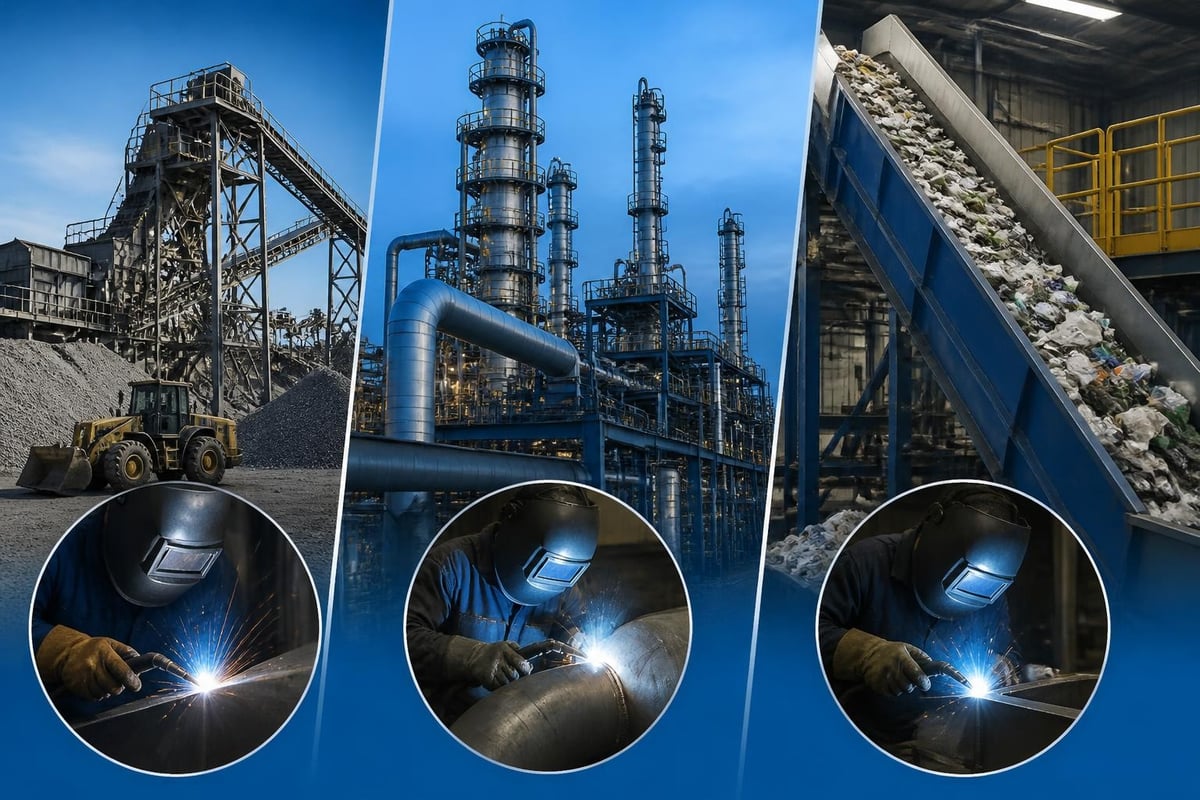
A robust welding procedure forms the foundation of quality fabrication work across industrial sectors. Whether you're fabricating recycling equipment, assembling aggregate processing machinery, or performing critical repairs in oil and gas facilities, the difference between a reliable weld and a costly failure often comes down to proper procedure development and adherence. In the commercial and industrial manufacturing environments that span the Western United States, understanding how to create, document, and implement welding procedures isn't just a regulatory requirement; it's essential for operational safety, structural integrity, and long-term equipment performance.
Understanding What Constitutes a Welding Procedure
A welding procedure represents far more than a simple set of instructions. It serves as a comprehensive roadmap that defines every critical parameter influencing weld quality and performance.
The foundation of any welding procedure includes the base metals being joined, the filler materials selected, the welding process employed, and the specific techniques required to achieve acceptable results. These elements work together to ensure consistent, repeatable welds that meet engineering specifications and code requirements. For a deeper look at how these documents are written and used, see our WPS welding procedure specification guide for 2026.
Core components of a complete welding procedure include:
- Base metal specifications and thickness ranges
- Filler metal classification and diameter
- Welding process selection (SMAW, GMAW, GTAW, FCAW, SAW)
- Joint design and preparation requirements
- Electrical parameters (voltage, amperage, polarity)
- Travel speed and technique specifications
- Preheat and interpass temperature requirements
- Post-weld heat treatment (PWHT) when applicable
- Shielding gas composition and flow rates
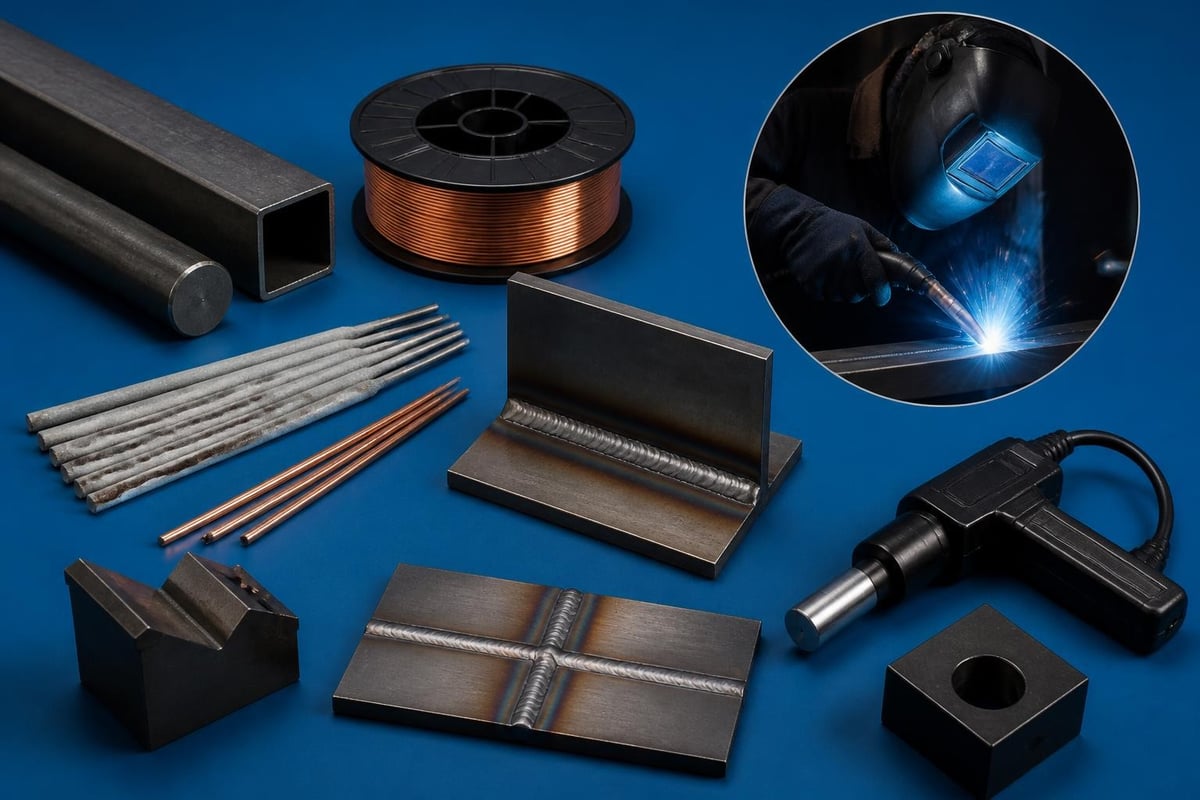
Understanding certified welding services requires knowledge of how these procedures are developed and qualified. The difference between a prequalified procedure and one requiring qualification testing determines both time and cost in project execution.
The Distinction Between WPS and PQR
Two critical documents govern procedure qualification: the Welding Procedure Specification (WPS) and the Procedure Qualification Record (PQR).
The WPS functions as the production instruction document. Welders follow this specification when performing actual fabrication work. It contains all the parameters and variables required to produce acceptable welds consistently. The American Welding Society provides resources including sample forms that help fabricators create properly formatted specifications.
The PQR, by contrast, documents the actual testing performed to validate that a proposed procedure produces welds meeting required mechanical and quality standards. This record captures the specific parameters used during qualification testing and the results of destructive and non-destructive examinations.
| Document | Purpose | Content | Usage |
|---|---|---|---|
| WPS | Production instruction | Parameter ranges for welders | Daily fabrication work |
| PQR | Qualification proof | Actual test values and results | Supports one or more WPS |
| Welder Performance Qualification (WPQ) | Personnel certification | Individual welder test records | Verifies welder competency |
One PQR can support multiple WPS documents, provided all WPS specifications fall within the qualified ranges. This flexibility reduces redundant testing while maintaining quality assurance.
Developing Procedures for Specific Applications
Creating an effective welding procedure begins with understanding the application requirements. Different industrial sectors demand different approaches based on service conditions, material specifications, and regulatory oversight.
Material Compatibility and Selection
The base metals being joined dictate many procedure variables. Carbon steel fabrication for aggregate equipment requires different considerations than stainless steel processing equipment or high-strength alloy components in oil and gas applications.
Recent research has examined GTAW process parameters for stainless steel, demonstrating how specific parameter combinations influence mechanical performance. These findings prove particularly relevant when developing procedures for corrosion-resistant equipment common in recycling and chemical processing operations.
Material-specific procedure considerations include:
- Carbon content influencing preheat requirements
- Alloying elements affecting filler metal selection
- Thickness transitions requiring qualification across ranges
- Strength matching between base and weld metal
- Corrosion resistance for service environment compatibility
For recycling equipment repair, procedures must account for material degradation from service exposure, contamination risks, and the structural demands of high-impact, abrasive environments.
Code and Standard Requirements
Multiple codes and standards govern welding procedure development depending on the application. Understanding which codes apply to your work determines qualification requirements.
The ASME Boiler and Pressure Vessel Code Section IX establishes qualification requirements for pressure vessels, boilers, and pressure piping. This code defines essential variables (changes requiring requalification) and non-essential variables (changes not requiring requalification).
AWS D1.1 for structural steel welding governs many fabrication projects in construction and heavy equipment manufacturing. ISO 15614 series provides international standards for procedure qualification testing across various welding processes and material groups.
Selecting the appropriate code depends on:
- End-use application and service conditions
- Jurisdictional requirements and enforcement
- Client specifications and contractual obligations
- Industry-specific standards (API, ASME, AWS, ISO)
Understanding ASME welding certification requirements helps manufacturers determine which procedures require formal qualification and what documentation must be maintained.
Procedure Qualification Process
Qualifying a welding procedure involves systematic testing to demonstrate that the proposed parameters produce welds meeting specified mechanical and quality requirements.
Preparation and Test Assembly
Qualification begins with preparing test coupons that represent the production joints. These test pieces must be welded using the exact parameters documented in the preliminary WPS, with every critical variable recorded.
The qualification welder must be skilled enough to execute the procedure properly, though this testing qualifies the procedure itself, not the individual welder. Separate welder performance qualifications verify individual competency.
Test assembly requirements typically include:
- Material thickness matching production range
- Joint configuration representing actual work
- Welding position(s) to be used in production
- Complete joint penetration or partial penetration as specified
- Proper backing, fit-up, and tack weld procedures
Temperature monitoring during qualification captures preheat, interpass, and PWHT parameters. These thermal records become part of the PQR documentation.
Destructive and Non-Destructive Testing
After welding, test assemblies undergo examination to verify weld quality and mechanical properties. The specific tests required depend on the governing code and application requirements.
Non-destructive examination (NDE) comes first, typically including visual inspection and radiographic or ultrasonic testing. These methods verify internal soundness without destroying the test specimen.
Following NDE, destructive tests measure mechanical properties:
- Tensile testing determines weld and heat-affected zone strength
- Bend tests evaluate ductility and fusion quality
- Impact testing (when required) measures toughness
- Macro-etching reveals penetration and fusion characteristics
- Hardness surveys identify heat-affected zone properties
| Test Type | Purpose | Typical Requirements | Pass/Fail Criteria |
|---|---|---|---|
| Tensile | Strength verification | One or more specimens per code | Meet minimum base metal strength |
| Guided bend | Ductility and fusion | Face, root, or side bends | No cracks exceeding code limits |
| Impact (Charpy) | Toughness at temperature | Three specimens per condition | Average and minimum values specified |
| Radiography | Internal discontinuities | 100% of test length | Acceptance per code reference |
All test results are documented in the PQR along with the actual welding parameters used. This document then supports the WPS for production use.
Implementing Procedures in Production
Documentation alone doesn't ensure quality fabrication. Proper implementation requires welder training, parameter control, and ongoing verification.
Welder Qualification and Training
Even with a qualified welding procedure, welders must demonstrate individual competency through performance qualification testing. This testing verifies that a welder can follow the WPS and produce acceptable welds.
Working with an experienced industrial welding contractor ensures access to qualified personnel familiar with procedure adherence and documentation requirements.
Welder performance qualifications specify:
- Qualified processes (each process requires separate qualification)
- Material types and thickness ranges
- Welding positions (flat, horizontal, vertical, overhead)
- Joint types (groove, fillet)
- Qualification expiration and renewal requirements
Training programs should emphasize not just welding technique but also understanding the rationale behind procedure parameters. When welders understand why preheat matters or how travel speed affects penetration, they're better equipped to maintain quality and identify potential problems.
Parameter Control and Monitoring
Modern welding equipment provides excellent control over electrical parameters, but effective procedure implementation requires monitoring multiple variables beyond just amperage and voltage.
Temperature control presents particular challenges in field applications where ambient conditions vary. Preheat requirements specified in the welding procedure must be verified before welding begins and monitored during production.
Critical monitoring points include:
- Electrical parameters matching WPS ranges
- Preheat and interpass temperature verification
- Travel speed estimation or measurement
- Shielding gas flow rate and coverage
- Filler metal diameter and classification confirmation
- Environmental protection (wind screens, enclosures)
Documentation of these parameters during production welding provides traceability and supports quality assurance programs. Many fabrication shops implement weld maps or traveler systems that follow assemblies through production, recording actual parameters used.
Health, Safety, and Environmental Considerations
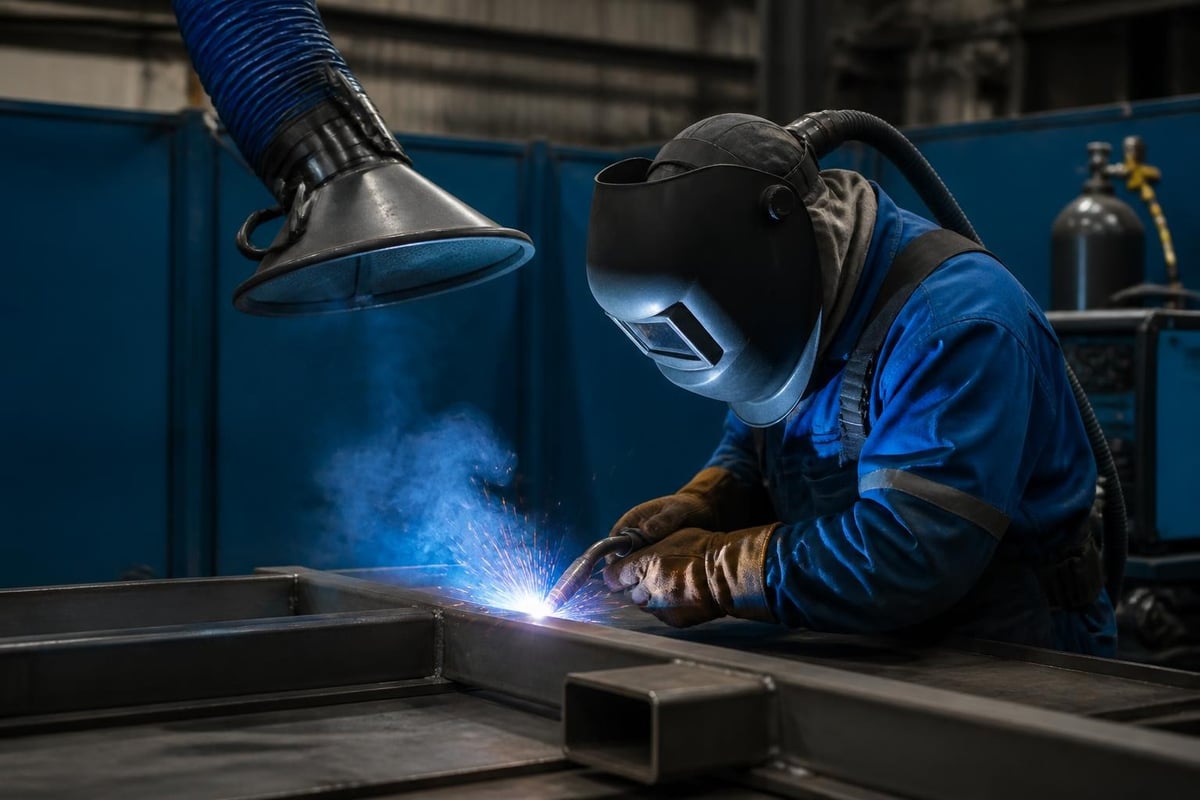
Welding procedure development must incorporate safety considerations beyond metallurgical requirements. Fume exposure, ventilation, and personal protective equipment specifications should be integrated into comprehensive procedures.
The UK Health and Safety Executive provides guidance on controlling welding fume exposure and implementing appropriate ventilation. While this guidance originates from UK regulations, the principles apply universally to protecting welder health.
Fume Control and Ventilation
Different welding processes and materials generate varying fume compositions and quantities. Procedures should specify ventilation requirements based on:
- Process fume generation rates
- Base metal and coating hazards (galvanized, painted surfaces)
- Filler metal fume composition
- Confined space or open-shop conditions
- Local exhaust ventilation or general dilution requirements
Stainless steel welding generates hexavalent chromium, requiring enhanced controls. Similarly, processes like flux-cored arc welding produce higher fume volumes than gas-shielded processes.
Personal Protective Equipment
While not traditionally documented in welding procedure specifications, comprehensive procedures should reference required PPE for the specific process and materials involved.
Standard PPE requirements include appropriate eye protection, flame-resistant clothing, welding helmets with proper filter lenses, and respiratory protection when engineering controls are insufficient. Specific applications may require additional protection against heat, radiation, or chemical exposure.
Documentation and Record Management
Comprehensive documentation systems support quality assurance, regulatory compliance, and continuous improvement. Effective record management extends beyond simply filing completed PQRs and WPS documents.
Essential Documentation Requirements
A complete welding quality system maintains multiple interconnected documents. The U.S. Government provides template guidance illustrating proper WPS formatting and required elements, offering a useful reference for developing internal documentation standards.
Core documentation components include:
- Procedure Qualification Records (PQRs) with complete test data
- Welding Procedure Specifications (WPS) for production use
- Welder Performance Qualifications (WPQ) for all production welders
- Production weld records linking assemblies to procedures and welders
- Non-conformance reports documenting defects and corrective actions
- Procedure revision histories tracking changes over time
Digital documentation systems increasingly replace paper-based filing, improving accessibility and search capability. Cloud-based systems enable field personnel to access current procedures and verify welder qualifications in real time.
Revision Control and Updates
Welding procedures require periodic review and updating as materials, processes, or requirements change. Formal revision control ensures all personnel work from current specifications.
Changes to essential variables require requalification through additional PQR testing. Non-essential variable changes can be incorporated through revision without requalification, though documentation must clearly identify what changed and when.
Version control practices include:
- Unique revision identifiers on all controlled documents
- Effective date tracking for procedure implementation
- Obsolete document removal from production areas
- Change authorization and approval signatures
- Distribution lists ensuring affected personnel receive updates
Regular procedure audits verify that production welding matches documented specifications and that welders possess current qualifications for the work they perform.
Continuous Improvement Through Procedure Refinement
The most effective fabrication operations treat procedures as living documents subject to continuous refinement based on production experience and evolving technology.
Gathering Production Feedback
Welders working with procedures daily often identify opportunities for improvement. Formal feedback mechanisms capture this frontline knowledge for procedure enhancement.
Production issues warranting procedure review include:
- Recurring defect patterns in specific joint types
- Difficulty maintaining specified parameters
- Excessive rework or repair requirements
- New material specifications from suppliers
- Changes in equipment capabilities
- Updated code requirements or client standards
Tracking weld repair rates by procedure helps identify specifications requiring refinement. Procedures consistently producing high-quality welds with minimal defects validate the specification quality.
Incorporating New Technology
Welding technology advances continuously, offering opportunities to improve productivity, quality, or both. New filler metal formulations, refined shielding gas mixtures, or improved process control systems may justify procedure requalification to capture these benefits.
Pulsed processes, modified short-circuit transfer modes, and advanced synergic programs built into modern power sources can enhance deposition rates and reduce defects. However, these innovations typically require formal qualification before production implementation.
When evaluating new technology, consider:
- Qualification costs versus productivity gains
- Training requirements for welders and supervisors
- Material cost differences between current and new consumables
- Quality improvements measurable through defect reduction
- Code acceptance of new processes or parameters
Special Process Considerations
Certain applications demand specialized procedure development beyond standard qualification approaches. These situations require additional technical expertise and often more extensive testing protocols.
Dissimilar Metal Joining
Joining different metal types, such as carbon steel to stainless steel or aluminum to steel, requires careful procedure development addressing thermal expansion differences, dilution calculations, and filler metal selection.
Transition joints in piping systems or bimetallic wear plates in recycling equipment exemplify applications requiring dissimilar metal procedures. These procedures must address:
- Dilution control to achieve appropriate weld composition
- Thermal expansion mismatch and residual stress management
- Galvanic corrosion considerations in service
- Filler metal selection balancing multiple requirements
- Extended qualification testing beyond standard requirements
High-Temperature Service
Equipment operating at elevated temperatures requires procedures qualified with additional testing to verify creep resistance and long-term stability. Power generation, petrochemical processing, and certain heat-treating applications fall into this category.
Procedure qualification for high-temperature service often includes:
- Extended mechanical testing at service temperature
- Creep-rupture testing for long-duration performance
- Elevated-temperature hardness verification
- Post-weld heat treatment mandatory for stress relief
- Specific filler metal chemistry requirements
These specialized qualifications require laboratory facilities capable of performing extended-duration testing at controlled temperatures, typically necessitating third-party testing services.
Developing and implementing effective welding procedures requires technical expertise, attention to detail, and commitment to quality documentation. From initial procedure development through qualification testing and production implementation, every step contributes to the reliable fabrication that industrial operations demand. Whether you're working with standard carbon steel fabrication or specialized alloy applications, proper procedures form the foundation of quality assurance and long-term equipment performance. LTJ Industrial Services brings comprehensive welding expertise to commercial and industrial clients throughout the Western United States, with qualified procedures and certified welders ready to support your fabrication, repair, and custom welding needs across recycling, aggregate, oil and gas, and manufacturing sectors.