
Finding the right industrial welding contractor near me can make the difference between a project that runs smoothly and one that faces costly delays, rework, and safety concerns. Industrial welding demands specialized expertise, certified technicians, and state-of-the-art equipment to deliver the structural integrity and precision your manufacturing or construction operation requires. Whether you're managing an aggregate processing facility, maintaining oil and gas infrastructure, or overseeing a recycling operation, choosing a qualified contractor is a critical decision that impacts production timelines, budget constraints, and long-term equipment reliability.
What Defines a Qualified Industrial Welding Contractor
Industrial welding differs significantly from residential or light commercial work. The stakes are higher, the materials more demanding, and the regulatory landscape more complex. A qualified industrial welding contractor near me brings several distinguishing characteristics that separate them from general welding service providers.
Certifications and Compliance Standards
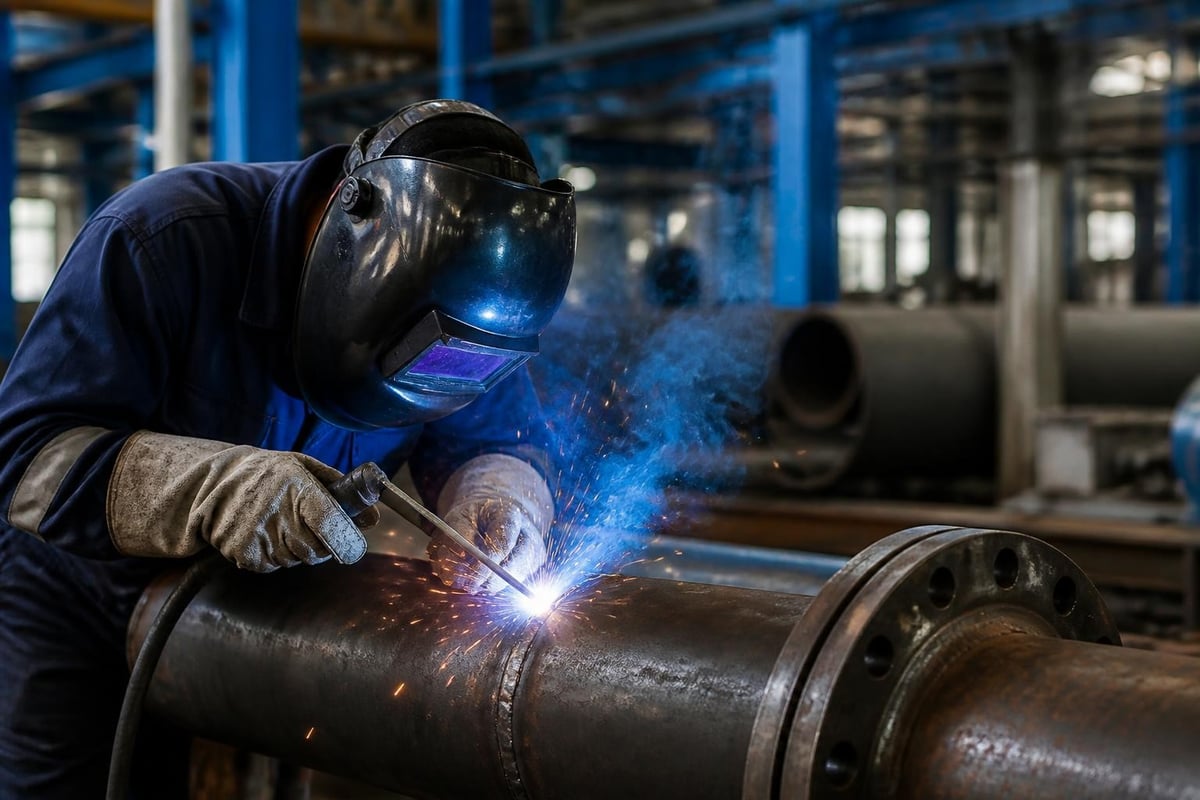
Professional certifications validate a contractor's technical competency and adherence to industry standards. The American Welding Society (AWS) Certified Welder program establishes baseline qualifications that ensure welders have demonstrated proficiency in specific processes and positions. Beyond individual welder credentials, industrial contractors should maintain organizational certifications relevant to your industry sector.
For pressure vessel work, pipeline projects, or boiler fabrication, compliance with ASME BPVC Section IX welding qualifications becomes mandatory. These stringent standards govern welding procedure specifications (WPS) and welder performance qualifications (WPQ), ensuring every joint meets engineered requirements for strength, ductility, and reliability under operating conditions.
Key certifications to verify:
- AWS Certified Welder credentials for specific processes (GMAW, GTAW, SMAW, FCAW)
- ASME Section IX qualifications for pressure equipment
- API 1104 certification for pipeline welding applications
- State-specific contractor licenses and bonding requirements
- OSHA safety training compliance and documentation
Evaluating Technical Capabilities and Equipment
When searching for an industrial welding contractor near me, technical capabilities extend far beyond basic welding skills. Modern industrial projects demand integrated fabrication services, advanced equipment, and the flexibility to handle both shop-based and field applications.
Shop Facilities and Fabrication Resources
A comprehensive metal fabrication process requires more than welding booths. Look for contractors with:
- CNC machining centers for precision component preparation
- Hydraulic press brakes and forming equipment for complex geometries
- Overhead crane systems rated for your project's heaviest assemblies
- Climate-controlled welding bays to maintain procedure parameters
- Quality inspection stations with nondestructive testing capabilities
The integration of precision machining services alongside welding operations streamlines project timelines and ensures tighter tolerances. Components arrive at the welding station already machined to specification, reducing fit-up challenges and improving final weld quality.
Field Service Capabilities
Not every welding requirement can be addressed in a shop environment. Equipment breakdowns, on-site repairs, and infrastructure maintenance demand mobile capabilities. A versatile welding service company should offer:
| Capability | Application | Benefits |
|---|---|---|
| Mobile welding rigs | On-site structural repairs | Eliminates transportation downtime |
| Portable machining equipment | Field alignment and boring | Restores equipment without removal |
| Generator-powered systems | Remote location work | Operates independent of site power |
| Emergency response teams | Critical failure situations | Minimizes production interruption |
Field welding introduces additional complexity regarding environmental controls, preheating requirements, and joint access. Contractors experienced in heavy equipment repair understand how to adapt procedures for challenging field conditions while maintaining code compliance.
Industry-Specific Experience Matters
Different industrial sectors present unique welding challenges. An industrial welding contractor near me with relevant industry experience brings valuable insights that generic fabricators cannot match.
Oil and Gas Sector Requirements
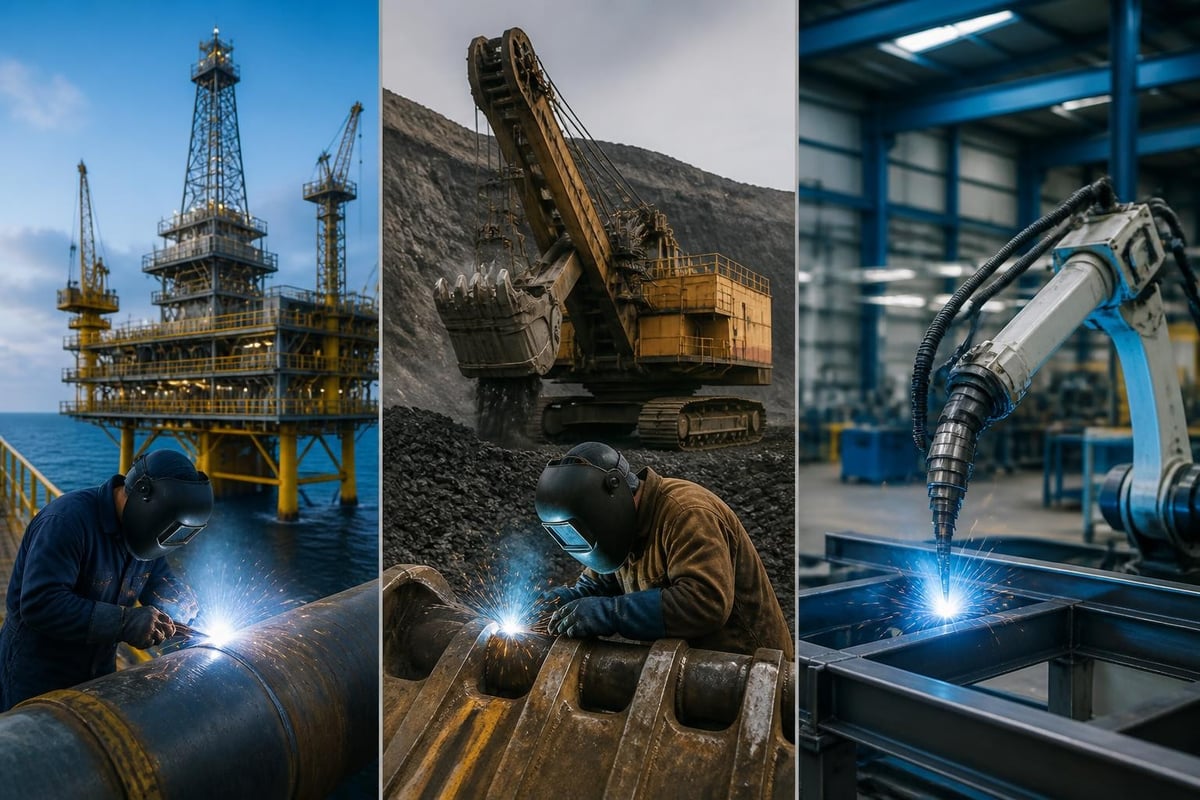
Oil and gas operations demand contractors familiar with sour service environments, hydrogen-induced cracking prevention, and API 1104 pipeline welding standards. Welding on active pipelines, constructing process skids, or maintaining extraction equipment requires specialized expertise in corrosion-resistant alloys and post-weld heat treatment protocols.
The custom skid fabrication process illustrates this complexity. Skid-mounted equipment packages must withstand vibration, thermal cycling, and potentially corrosive process fluids while maintaining leak-tight integrity over decades of service.
Aggregate and Mining Applications
Aggregate processing and mining equipment endure continuous abrasion, impact loading, and material buildup. Contractors serving these sectors should demonstrate proficiency in:
- Hardfacing techniques for wear-resistant buildup on bucket lips, crusher components, and conveyor parts
- High-strength structural repairs on loader frames, excavator arms, and haul truck bodies
- Rapid turnaround capabilities to minimize equipment downtime during production cycles
Mobile bucket repair and hardfacing services exemplify the responsive approach mining operations require, bringing repair capabilities directly to the equipment rather than waiting for shop availability.
Manufacturing and Recycling Operations
Manufacturing facilities and recycling centers need contractors who understand production flow, contamination control, and the integration of custom fabrication into existing systems. Projects range from conveyor system modifications to complete material handling system installations.
Quality Assurance and Inspection Protocols
Welding quality directly impacts structural safety, equipment longevity, and regulatory compliance. When evaluating an industrial welding contractor near me, investigate their quality management systems and inspection capabilities thoroughly.
Nondestructive Testing Integration
Visual inspection catches obvious defects, but subsurface flaws require nondestructive testing (NDT). Professional contractors either employ certified NDT technicians or maintain relationships with qualified inspection services. The ASNT standards govern NDT practitioner certification and testing procedures across multiple methods:
- Radiographic testing (RT) for complete volumetric examination of critical welds
- Ultrasonic testing (UT) for thickness verification and flaw detection
- Magnetic particle inspection (MT) for surface and near-surface discontinuities in ferromagnetic materials
- Liquid penetrant testing (PT) for detecting surface-breaking defects in non-magnetic alloys
- Visual testing (VT) as the foundation of all weld acceptance procedures
Documentation and Traceability
Industrial projects generate extensive documentation requirements. Quality contractors maintain comprehensive records including:
- Welding procedure specifications (WPS) for every joint configuration
- Welder performance qualification records (PQR) demonstrating procedure validation
- Material certifications and mill test reports for base metals and filler materials
- Inspection reports documenting NDT results and acceptance criteria
- Repair procedures and rework documentation when defects are addressed
This documentation proves invaluable during regulatory audits, insurance claims, or warranty disputes. It demonstrates due diligence and provides the traceability modern quality management systems demand.
Safety Practices and Environmental Compliance
Industrial welding operations generate multiple hazards requiring proactive management. A responsible industrial welding contractor near me prioritizes worker safety and environmental stewardship as core operational values.
Workplace Safety Programs
Comprehensive safety programs extend beyond basic OSHA compliance to create a culture where workers actively identify and mitigate risks. Evaluate contractors based on:
- Documented safety training including registered apprenticeship programs that emphasize safety alongside technical skills
- Personal protective equipment standards exceeding minimum requirements
- Confined space entry procedures for work inside vessels, tanks, and structural enclosures
- Hot work permits and fire watch protocols preventing ignition of combustible materials
- Incident reporting and investigation processes that drive continuous improvement
Fume Control and Emissions Management
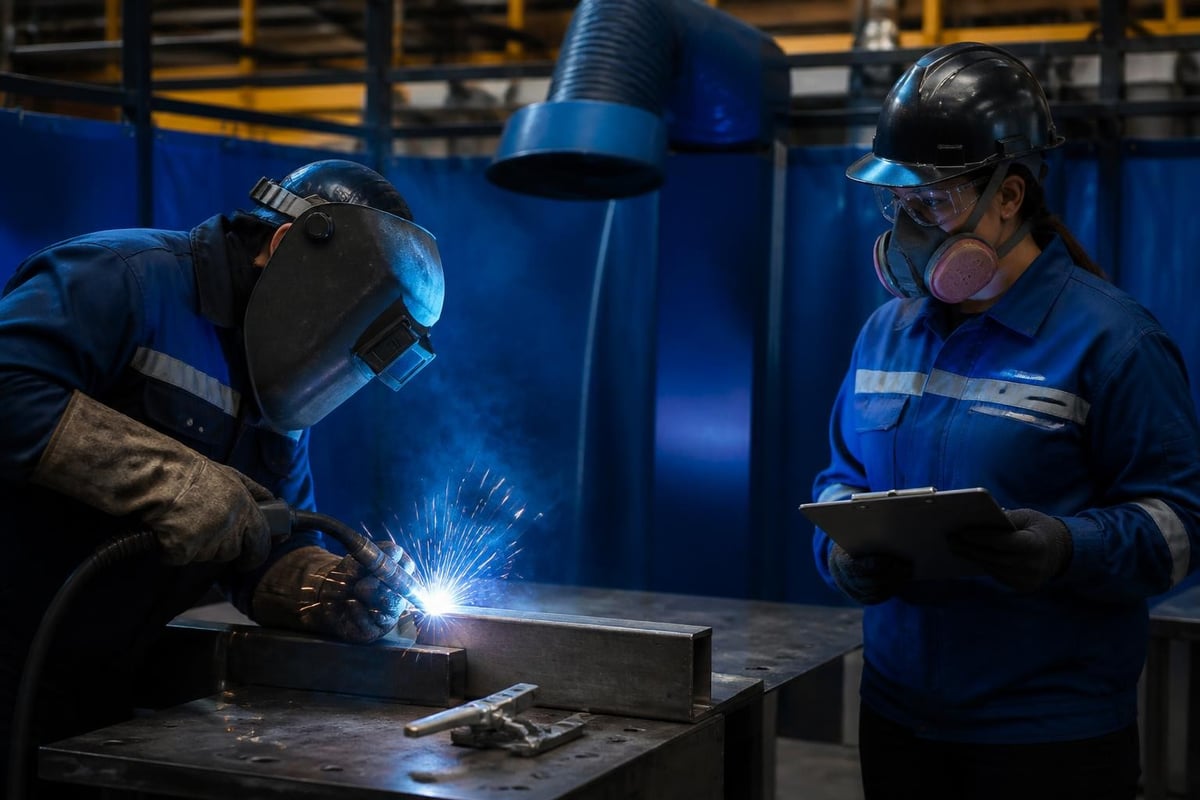
Welding processes generate metal fumes, particulates, and potentially toxic gases requiring proper ventilation and control. The EPA guidance on electric arc welding emissions provides emission factors and control technology recommendations for various welding processes.
Shop-based operations should incorporate:
- Local exhaust ventilation at each welding station
- High-efficiency particulate filtration on central collection systems
- Respiratory protection programs for workers exposed to hazardous fumes
- Air quality monitoring to verify exposure limits are maintained
Field operations present additional challenges, requiring portable ventilation equipment and careful positioning to prevent fume accumulation in enclosed or semi-enclosed spaces.
Project Management and Communication
Technical expertise means little if a contractor cannot deliver projects on schedule and within budget. Strong project management separates reliable partners from problematic vendors.
Scheduling and Timeline Reliability
Industrial operations run on tight schedules where welding delays cascade into costly production interruptions. Assess potential contractors on:
| Factor | Evaluation Questions | Red Flags |
|---|---|---|
| Resource allocation | How do they staff projects? | Single-person operations without backup |
| Contingency planning | What happens when equipment fails? | No equipment redundancy or rental relationships |
| Progress tracking | How are you informed of status? | Reactive communication only when problems arise |
| Completion guarantees | Do they commit to deadlines? | Vague timelines without milestones |
Responsive Communication
When equipment failures strike or production modifications become urgent, responsive communication becomes critical. A quality industrial services company maintains multiple contact channels and commits to specific response timeframes for different priority levels.
Emergency situations demand 24/7 availability. Routine projects require regular status updates. Complex fabrications benefit from collaborative design reviews where the contractor's experience informs engineering decisions before fabrication begins.
Cost Structures and Value Considerations
Price matters, but the lowest bid rarely delivers the best value on industrial welding projects. Understanding cost structures helps you evaluate proposals intelligently.
Transparent Pricing Models
Reputable contractors provide detailed breakdowns showing:
- Labor rates differentiated by skill level and certification requirements
- Material costs with markup percentages clearly stated
- Equipment charges for specialized welding processes or rental equipment
- Inspection and testing fees as separate line items
- Travel and mobilization expenses for field service work
Hidden fees and vague "allowances" indicate poor project definition or intentionally low initial bids that will grow through change orders.
Value-Added Services
The most cost-effective contractor may offer integrated services that eliminate coordination headaches and reduce total project cost. Consider the value of:
- Design assistance helping optimize weldments for manufacturability
- Material procurement leveraging contractor purchasing power
- Secondary operations like waterjet cutting, sandblasting, and powder coating
- Installation support ensuring fabrications integrate properly with existing systems
- Warranty coverage backing workmanship for specified periods
These integrated capabilities streamline project execution and reduce the coordination burden on your internal staff.
Questions to Ask Before Hiring
Armed with knowledge about qualifications, capabilities, and industry requirements, you can conduct more productive contractor evaluations. Structure your vetting process around these critical questions:
Regarding qualifications:
- Which welding processes are your technicians certified to perform?
- Do you maintain current ASME or API certifications relevant to our industry?
- How frequently do welders undergo recertification and skills assessment?
About experience:
- What similar projects have you completed in the past 24 months?
- Can you provide references from clients in our industry sector?
- Have you worked with the specific materials and alloys our project requires?
Concerning capacity:
- What is your current project backlog and available start date?
- Do you have adequate equipment and personnel to meet our timeline?
- How do you handle concurrent projects without compromising quality?
Related to quality:
- What NDT methods do you perform in-house versus subcontract?
- How do you document welding procedures and qualification records?
- What is your typical defect rate and how are repairs managed?
On safety and compliance:
- What is your EMR (Experience Modification Rate) for workers' compensation?
- How do you ensure compliance with applicable codes and standards?
- What environmental controls do you implement for welding operations?
Geographic Considerations in the Western United States
Location matters when selecting an industrial welding contractor near me, particularly across the expansive Western United States where projects may span remote locations far from major metropolitan centers.
Regional Expertise and Logistics
Contractors based in Colorado, like those serving the manufacturing industries in Colorado, understand the unique challenges of high-altitude welding, extreme temperature variations, and the logistics of reaching remote oil and gas installations, mining operations, and aggregate facilities across mountainous terrain.
Proximity reduces mobilization costs but shouldn't be the sole selection criterion. A contractor 200 miles away with relevant experience and proper equipment often delivers better value than a local shop lacking appropriate certifications or capacity.
Multi-State Operations
Large-scale projects may require work across state lines, introducing licensing and regulatory complexity. Verify that contractors maintain appropriate licenses for every jurisdiction where work will occur and understand how different state regulations may affect project execution.
Making the Final Selection
After evaluating qualifications, capabilities, experience, and proposals, the selection decision should balance multiple factors rather than focusing exclusively on price or proximity.
Weighted Evaluation Criteria
Structure your decision using a weighted scorecard that reflects your project priorities:
| Criterion | Weight | Evaluation Notes |
|---|---|---|
| Technical qualifications | 25% | Certifications, equipment, capabilities |
| Relevant experience | 20% | Similar projects, industry knowledge |
| Safety record | 20% | EMR, incidents, training programs |
| Quality systems | 15% | NDT capabilities, documentation |
| Schedule reliability | 10% | References, resource availability |
| Price competitiveness | 10% | Total value, not just initial bid |
This structured approach prevents price from dominating the decision while ensuring all critical factors receive appropriate consideration.
Building Long-Term Partnerships
The best industrial welding contractors become strategic partners rather than transactional vendors. Look for contractors interested in understanding your operation's broader needs, who proactively suggest improvements, and who demonstrate commitment to continuous relationship development.
Long-term partnerships enable contractors to maintain inventory of commonly needed materials, pre-qualify procedures for recurring applications, and develop deep familiarity with your equipment and processes. This familiarity accelerates project execution and often reveals opportunities for preventive maintenance that avoids emergency repairs.
Regional Advantages of Western-Based Contractors
Industrial operations throughout the Western United States benefit from working with regionally-based contractors who understand the unique operational environment. The combination of extractive industries, agricultural processing, and manufacturing creates distinct requirements that coastal or Midwestern contractors may not fully appreciate.
Contractors serving multiple Western states develop expertise in the specific challenges these industries face, from seasonal access limitations in mountain locations to the specialized metallurgy requirements of geothermal operations. Their field welding capabilities adapt to the reality that much Western industrial infrastructure exists in remote locations where shop access is impractical.
Integration with Broader Industrial Services
Welding rarely exists in isolation within industrial maintenance and fabrication projects. The most valuable contractors offer complementary capabilities that address complete project scopes.
Machining and Precision Work
Complex fabrications often require precision machining before or after welding. Custom machining services ensure bearing seats, seal surfaces, and mounting points meet exacting tolerances. CNC capabilities enable rapid production of replacement components when original parts are obsolete or unavailable.
Hydraulic System Integration
Mining, aggregate processing, and construction equipment rely heavily on hydraulic systems. Contractors offering hydraulic equipment repair alongside welding services can address complete equipment rebuilds without coordinating multiple vendors. This integration proves especially valuable on mobile equipment where hydraulic failures and structural damage often occur simultaneously.
Surface Preparation and Finishing
Properly prepared surfaces enable superior weld quality while appropriate finishing protects completed fabrications. Integrated contractors provide industrial sandblasting for surface preparation, industrial painting for corrosion protection, and powder coating for demanding environments where conventional paint systems fail prematurely.
Selecting the right industrial welding contractor near me requires careful evaluation of certifications, capabilities, industry experience, and safety practices rather than defaulting to the closest or cheapest option. The contractors who deliver the greatest value combine technical expertise with comprehensive service offerings, enabling them to address complete project scopes efficiently. When you need a partner who understands the demanding requirements of Western industrial operations, LTJ Industrial Services brings certified welding expertise, advanced fabrication capabilities, and responsive field service throughout Colorado and the broader Western region to keep your operations running reliably.