
Hydraulic systems power critical operations across industrial manufacturing, aggregate processing, oil and gas extraction, and recycling facilities throughout the Western United States. When these systems fail, production halts, costs escalate, and safety risks emerge. Understanding the fundamentals of hydraulic system repair enables facility managers and maintenance teams to minimize downtime, extend equipment life, and maintain operational efficiency in demanding industrial environments.
Understanding Hydraulic System Fundamentals
Hydraulic systems convert mechanical energy into fluid power through pressurized hydraulic fluid. These systems consist of pumps, motors, cylinders, valves, hoses, and reservoirs that work together to transmit force and motion. In industrial settings, hydraulic equipment operates under extreme pressures ranging from 1,000 to 5,000 PSI or higher, making proper maintenance and repair essential for safe operation.
The basic principle involves incompressible fluid transmitting force from one point to another. A hydraulic pump creates flow, and the system directs this pressurized fluid through control valves to actuators (cylinders or motors) that perform mechanical work. This elegant design provides exceptional force multiplication, precise control, and compact power delivery compared to mechanical or electrical alternatives.
Common Applications in Industrial Sectors
Manufacturing facilities rely on hydraulic presses, injection molding machines, and material handling equipment. Aggregate operations use hydraulic excavators, crushers, and conveyor systems. Oil and gas installations depend on hydraulic fracturing equipment, wellhead control systems, and drilling rigs. Recycling plants operate hydraulic balers, shears, and compactors that process tons of material daily.
Each application presents unique repair challenges based on operating conditions, duty cycles, and environmental exposure. Industrial equipment repair demands specialized knowledge of these diverse applications to deliver effective solutions.
Diagnostic Procedures for Hydraulic Failures
Effective hydraulic system repair begins with accurate diagnosis. Visual inspection reveals external leaks, damaged hoses, loose fittings, and contamination. Technicians examine hydraulic fluid for discoloration, particulate matter, and unusual odor that indicate internal component wear or thermal degradation.
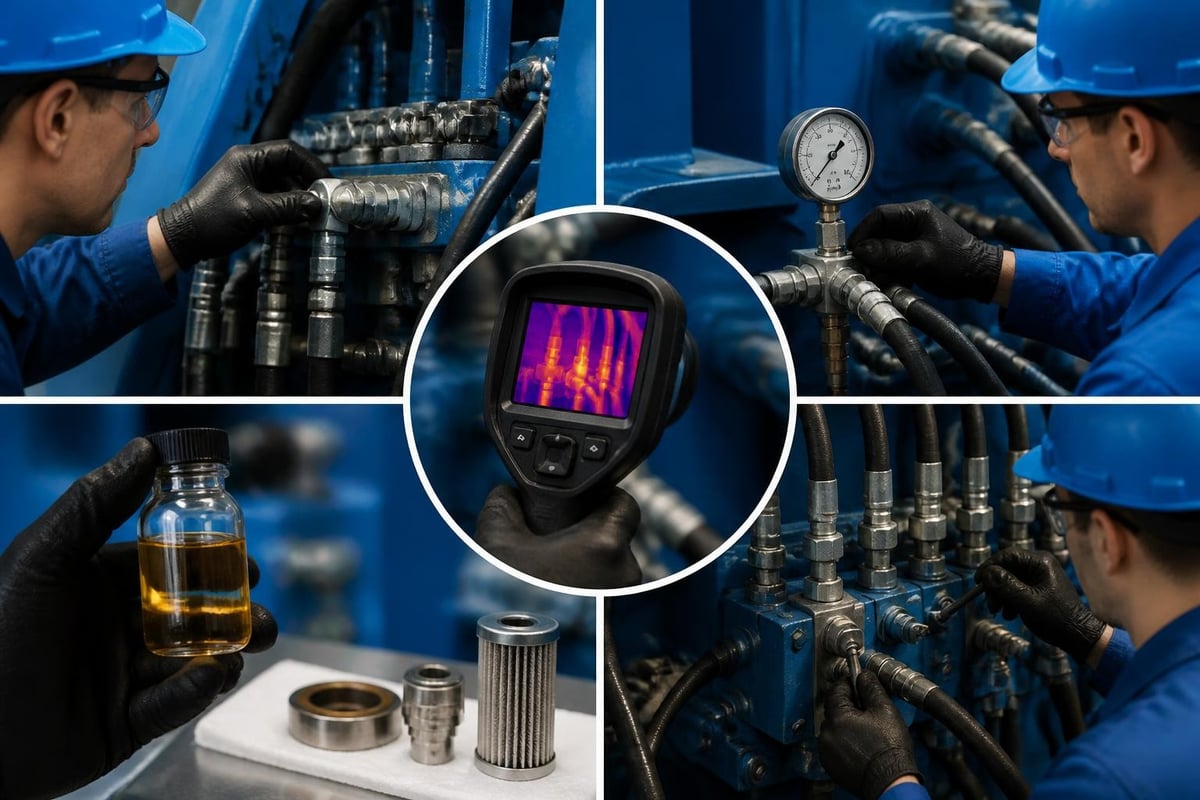
Performance testing measures system pressure, flow rate, and actuator speed against manufacturer specifications. Pressure gauges installed at critical points identify restriction, pump inefficiency, or valve malfunction. Temperature sensors detect overheating that signals inadequate cooling, excessive friction, or improper fluid viscosity.
Pressure Testing Methodology
| Test Location | Normal Range | Warning Signs | Probable Causes |
|---|---|---|---|
| Pump Outlet | 2000-3000 PSI | Below spec | Worn pump, internal leakage |
| System Relief | Set Pressure ±50 PSI | Erratic readings | Faulty relief valve |
| Actuator Inlet | 85-95% pump pressure | Significant drop | Line restriction, valve issue |
| Return Line | 50-150 PSI | Elevated pressure | Clogged filter, blocked return |
Contamination analysis through laboratory fluid sampling provides definitive data about particle counts, water content, and chemical composition. According to fluid power system contamination research, contamination remains the leading cause of hydraulic failures, accounting for 70-80% of system problems.
Component-Level Repair Strategies
Hydraulic system repair involves targeted replacement or rebuilding of failed components while maintaining system integrity. Pump repair addresses worn bearings, damaged seals, and eroded internal clearances. Technicians disassemble pumps in clean environments, measure critical dimensions, replace wear components, and reassemble to factory tolerances.
Cylinder repair requires precision machining to restore rod surfaces and bore dimensions. Pitted or scored cylinder rods receive chrome plating or specialized coatings after machining. Barrel honing removes scoring while maintaining bore geometry. Seal replacement uses materials compatible with operating temperatures, fluid types, and pressure ranges.
Valve Reconditioning Techniques
Control valves experience wear from continuous operation and fluid contamination. Spool valves develop internal leakage as clearances increase beyond acceptable limits. Repair involves cleaning valve bodies, measuring internal dimensions, replacing spools or sleeves, and testing response characteristics.
- Directional control valves: Replace solenoids, clean pilot passages, verify spool movement
- Pressure relief valves: Calibrate spring tension, replace poppets, test cracking pressure
- Flow control valves: Clean orifices, replace check components, verify flow curves
- Proportional valves: Service electronic feedback systems, calibrate control signals, test linearity
Hose and fitting replacement demands attention to specifications and installation practices. Selecting proper hose size, pressure rating, and end fittings prevents premature failure. Following hydraulic hose inspection procedures ensures compliance with safety standards and manufacturer recommendations.
Contamination Control and Fluid Management
Preventing contamination represents the most effective hydraulic system repair strategy. New hydraulic fluid contains manufacturing residues and particulates that require filtration before use. Reservoir design should minimize turbulence, provide adequate settling time, and prevent ingress of airborne contaminants.
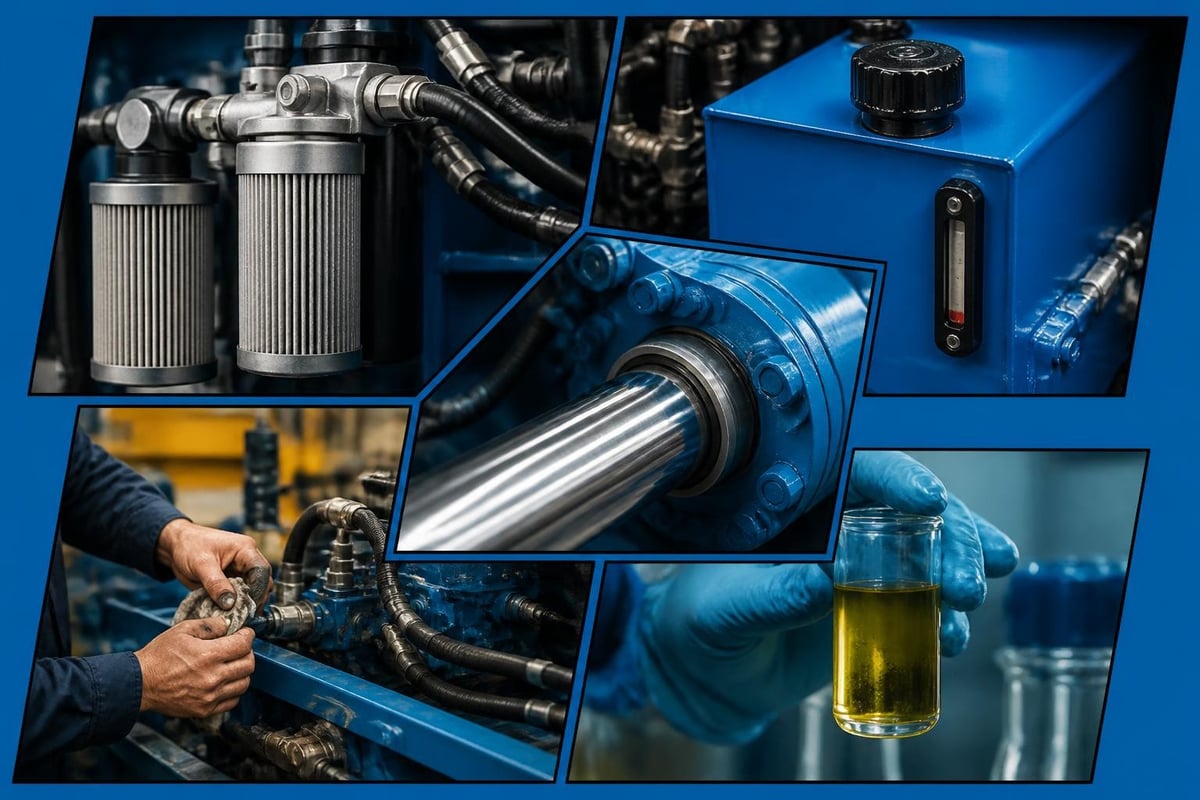
Breather filters protect reservoirs from atmospheric dust while allowing thermal expansion. Magnetic drain plugs capture ferrous wear particles before they circulate through the system. Return line filters remove contaminants generated by component wear during operation.
Filtration System Specifications
Proper filter selection balances flow capacity, particle retention, and service life. Beta ratios indicate filter efficiency at specific particle sizes. A beta 200 rating at 10 microns means the filter captures 99.5% of particles 10 microns or larger.
| Filter Location | Typical Rating | Replacement Interval | Purpose |
|---|---|---|---|
| Suction Strainer | 150 micron | 1000 hours | Protect pump from large debris |
| Pressure Line | 10-25 micron | 500 hours | Remove wear particles |
| Return Line | 3-10 micron | 750 hours | Final contamination removal |
| Off-Line Kidney Loop | 1-3 micron | 2000 hours | Continuous fluid conditioning |
Fluid compatibility affects seal life, component wear, and system performance. Petroleum-based, synthetic, and biodegradable fluids each require specific seal materials and maintenance procedures. Mixing incompatible fluids causes seal swelling, fluid breakdown, and accelerated wear.
Field Repair Versus Shop Repair Considerations
Location determines repair approach and resource requirements. Field hydraulic system repair addresses equipment that cannot be transported to service facilities due to size, location, or operational constraints. Mobile service units bring diagnostic tools, replacement components, and technical expertise directly to industrial sites.
Field repairs suit emergency breakdowns, minor component replacement, and scheduled maintenance during planned shutdowns. Technicians perform hose replacement, seal kits installation, filter changes, and fluid sampling on-site. Complex repairs requiring machining, welding, or extensive disassembly necessitate shop-based service.
Shop-Based Repair Advantages
Controlled environments enable precision work impossible in field conditions. Climate control prevents contamination during component assembly. Specialty equipment including hydraulic test stands, honing machines, and surface grinders restore components to factory specifications.
- Complete system disassembly and component inspection
- Precision machining of worn surfaces and critical dimensions
- Ultrasonic cleaning of all components before reassembly
- Controlled assembly in clean room conditions
- Performance testing under simulated operating conditions
- Documentation of repairs and performance verification
Companies providing heavy equipment repair maintain both field service capabilities and fully equipped shop facilities. This dual approach delivers comprehensive hydraulic system repair regardless of equipment location or failure complexity.
Preventive Maintenance Programs
Scheduled maintenance prevents catastrophic failures and extends hydraulic system service life. Comprehensive programs include fluid sampling, filter replacement, visual inspections, and performance monitoring. Establishing baseline measurements enables trending analysis that identifies gradual performance degradation before failure occurs.
Fluid sampling intervals depend on operating conditions, with severe duty applications requiring monthly analysis. Laboratory reports track particle counts, viscosity changes, additive depletion, and contamination levels. Trending this data reveals developing problems such as pump wear, water ingress, or thermal stress.
Maintenance Schedule Framework
| Interval | Tasks | Expected Outcomes |
|---|---|---|
| Daily | Visual inspection, leak checks, temperature monitoring | Early leak detection, abnormal operation identification |
| Weekly | Fluid level verification, filter indicator checks | Prevent low fluid operation, timely filter service |
| Monthly | Fluid sampling, pressure testing, actuator operation | Contamination trending, performance verification |
| Quarterly | Filter replacement, breather service, detailed inspection | Sustained contamination control, wear prevention |
| Annual | Complete system evaluation, component overhaul planning | Long-term reliability, budget planning |
Temperature monitoring reveals operating efficiency and cooling system performance. Hydraulic fluid operating temperatures should remain between 110°F and 140°F for optimal viscosity and component life. Sustained operation above 180°F accelerates fluid oxidation, seal degradation, and component wear.
Regulatory Compliance and Safety Standards
Industrial hydraulic systems operate under regulatory oversight requiring periodic inspection and documentation. The Code of Federal Regulations hydraulic requirements establishes inspection intervals, pressure testing protocols, and safety device requirements for commercial applications.
OSHA standards mandate regular inspection of hydraulic hoses, fittings, and safety devices. Damaged hoses require immediate replacement regardless of scheduled maintenance intervals. Pressure relief valves need annual testing and certification to verify proper operation at specified pressures.
Functional safety considerations become critical in applications where hydraulic failure creates personnel hazards or environmental risks. Implementing hydraulic safety standards and functional safety protocols reduces liability exposure while protecting workers and equipment.
Documentation Requirements
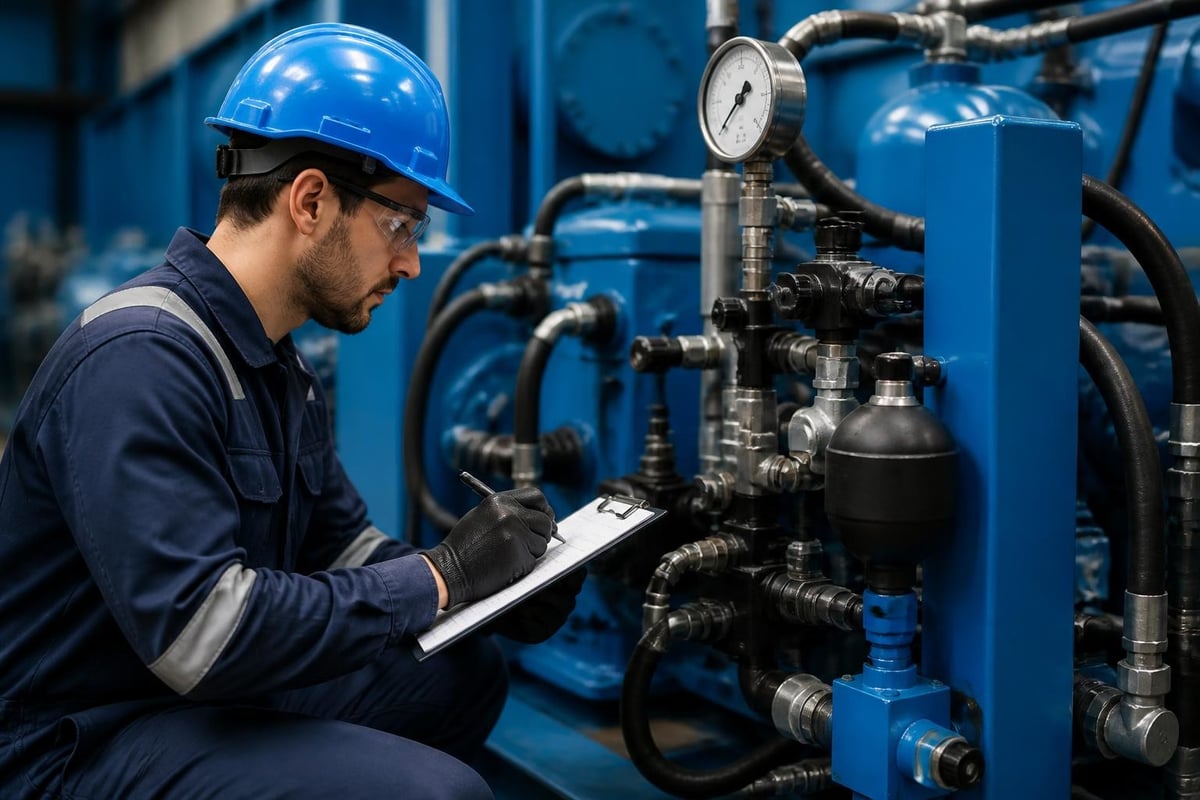
Maintaining comprehensive service records demonstrates compliance and supports insurance claims. Documentation should include:
- Inspection reports: Date, inspector identification, findings, corrective actions
- Repair records: Components replaced, specifications, work performed, test results
- Fluid analysis: Laboratory reports, trending charts, action thresholds
- Pressure tests: Test pressures, hold times, results, certification
- Training records: Technician qualifications, specialized certifications, equipment authorizations
Facilities serving oil and gas operations face particularly stringent documentation requirements due to environmental regulations and industry standards. Detailed records protect against regulatory penalties and provide valuable maintenance history.
Troubleshooting Common Hydraulic Problems
Systematic troubleshooting isolates failure causes efficiently. Slow actuator movement indicates insufficient flow from pump wear, restriction in supply lines, or internal cylinder leakage. Pressure testing at sequential points identifies the restriction location or failing component.
Erratic operation suggests air entrainment, contaminated fluid, or faulty control valves. Air bubbles in return line sight glasses confirm air ingestion through loose suction connections or low reservoir levels. Foaming fluid requires deaeration through controlled circulation or vacuum degassing.
Noise Diagnosis Guide
Unusual sounds indicate specific failure modes. Cavitation produces distinctive rattling as vapor bubbles collapse inside the pump. This results from restricted inlet conditions, excessive suction lift, or inadequate fluid viscosity. Whining noises suggest worn pump bearings or misalignment.
- Grinding: Metal-to-metal contact, bearing failure, contamination damage
- Squealing: Air entrainment, inadequate lubrication, seal problems
- Knocking: Pressure spikes, shock loading, loose mounting
- Humming: Normal operation at design frequency, electrical issues with AC motors
Heat generation exceeding normal parameters points to mechanical friction, excessive pressure drops, or inadequate cooling capacity. Thermal imaging identifies hot spots on components, indicating internal wear or malfunction requiring hydraulic system repair attention.
Specialized Repair Equipment and Tools
Professional hydraulic system repair requires specialized tools beyond standard mechanic equipment. Hydraulic torque wrenches tighten high-pressure fittings to precise specifications preventing leaks and ensuring safety. Flaring tools create leak-free connections for rigid hydraulic tubing installations.
Contamination control equipment includes portable filtration systems for flushing new installations and cleaning contaminated systems. These units circulate fluid through high-efficiency filters removing particles, water, and dissolved gases. Fluid transfer equipment with filtration capability prevents introducing contamination during service.
Testing equipment verifies repair quality and system performance. Flow meters measure actual versus specified flow rates. Temperature sensors with data logging capabilities track thermal patterns during operation. Particle counters provide immediate contamination assessment without laboratory analysis delays.
Essential Tool Categories
- Measurement instruments: Pressure gauges, flow meters, temperature sensors, particle counters
- Disassembly tools: Seal pullers, bearing pullers, snap ring pliers, specialized wrenches
- Machining equipment: Cylinder hones, rod polishers, valve grinding fixtures
- Assembly aids: Seal installation tools, torque wrenches, cleanliness verification
- Testing apparatus: Hydraulic test stands, load simulation, performance verification
Organizations offering custom fabrication services often maintain machine shops capable of manufacturing replacement components when original parts become unavailable. This capability proves invaluable for older equipment or specialized applications.
Advanced Diagnostic Technologies
Modern hydraulic system repair incorporates sophisticated diagnostic tools providing deeper insight into component condition. Vibration analysis detects bearing wear, misalignment, and cavitation through frequency spectrum analysis. Handheld analyzers capture vibration signatures compared against baseline measurements and failure databases.
Thermography reveals thermal patterns indicating restriction, friction, or inadequate cooling. Infrared cameras produce detailed images showing temperature distribution across components and systems. Hot spots identify failing bearings, restricted passages, or overloaded circuits requiring investigation.
Ultrasonic leak detection locates internal and external leakage impossible to see visually. High-frequency sound generated by pressurized fluid escaping through small openings becomes audible through specialized sensors. This technology finds valve seat leakage, fitting seepage, and seal bypass affecting system performance.
Predictive Maintenance Integration
Combining diagnostic data creates predictive maintenance programs that schedule repairs based on actual condition rather than arbitrary time intervals. Sensor networks monitor pressure, temperature, flow, and vibration continuously. Data analytics identify trends indicating approaching failure thresholds.
Machine learning algorithms process historical failure data to predict component life expectancy under current operating conditions. This approach optimizes maintenance timing, minimizes unnecessary component replacement, and prevents unexpected breakdowns. Integration with enterprise asset management systems provides comprehensive equipment lifecycle tracking.
Environmental Considerations in Hydraulic Repair
Responsible hydraulic system repair addresses environmental protection throughout the service lifecycle. Proper fluid disposal prevents soil and water contamination. Used hydraulic oil requires collection, storage, and disposal through licensed waste management facilities or recycling programs that reclaim usable base stocks.
Spill containment during repair operations protects work environments and surrounding areas. Drain pans, absorbent materials, and proper storage containers prevent accidental releases. Emergency response procedures and cleanup materials should be immediately available at all work locations.
Biodegradable hydraulic fluids reduce environmental impact in sensitive applications. These fluids derived from vegetable oils or synthetic esters break down naturally if released. While offering environmental advantages, biodegradable fluids require compatible seals and specific maintenance procedures differing from petroleum-based products.
Sustainable Repair Practices
- Component rebuilding: Reconditioning versus replacement reduces waste and resource consumption
- Fluid recycling: Off-line filtration extends fluid life and reduces disposal volumes
- Seal material selection: Long-life compounds minimize replacement frequency
- Energy efficiency: System optimization reduces power consumption and heat generation
- Leak elimination: Preventing fluid loss protects environment and reduces replacement costs
Facilities serving industrial manufacturing sectors increasingly adopt sustainable practices meeting corporate environmental goals while reducing operating costs. Professional repair providers incorporate these practices into standard service delivery.
Training and Technician Qualifications
Effective hydraulic system repair depends on technician knowledge, experience, and certification. Basic mechanical skills provide the foundation, but hydraulic expertise requires specialized training in fluid power principles, component function, and system design. Industry certification programs validate competency and ensure consistent service quality.
Manufacturer-specific training covers unique features of proprietary components and systems. Original equipment manufacturers offer courses addressing their products, special tools, and recommended procedures. This training proves essential when servicing sophisticated electrohydraulic systems with integrated controls.
Safety training protects technicians from high-pressure hazards, chemical exposure, and mechanical risks. Proper lockout-tagout procedures prevent accidental system pressurization during repair. Personal protective equipment including safety glasses, gloves, and hearing protection addresses specific hazards encountered during hydraulic work.
Continuing Education Requirements
Technology advances require ongoing education to maintain current knowledge. New seal materials, synthetic fluids, electronic controls, and diagnostic equipment demand updated training. Professional organizations offer seminars, webinars, and certification programs addressing emerging technologies and best practices.
Experienced technicians mentoring apprentices transfer practical knowledge not available through formal education. This hands-on training builds troubleshooting skills, develops mechanical intuition, and establishes quality standards. Successful shops balance formal training with supervised practical experience creating well-rounded service capabilities.
Companies like LTJ Industrial Services invest in technician development ensuring personnel maintain current expertise across diverse industrial applications. This commitment to training excellence translates directly into superior repair quality and customer satisfaction.
Successful hydraulic system repair combines diagnostic expertise, quality components, proper procedures, and preventive maintenance strategies that extend equipment life and maximize operational reliability. Whether your facility operates aggregate crushers, oil field equipment, or manufacturing machinery throughout the Western United States, professional hydraulic service keeps critical systems running efficiently. LTJ Industrial Services delivers comprehensive hydraulic repair capabilities through experienced technicians, fully equipped shop facilities, and responsive field service teams ready to address your maintenance challenges. Contact LTJ Industrial Services today to discuss your hydraulic system repair needs and discover how our expertise supports your operational goals.