
Hydraulic cylinders power critical equipment across industrial operations, from manufacturing presses to aggregate loaders. When these essential components begin to fail, the consequences extend far beyond a simple mechanical issue. Downtime, production losses, and safety hazards multiply rapidly. Recognizing hydraulic cylinder repair signs early transforms reactive emergencies into planned maintenance, protecting both your equipment investment and operational schedule. For industrial operators throughout the Western United States, understanding these warning signals determines whether you schedule controlled repairs or face unexpected shutdowns.
Visible Fluid Leakage and Seal Deterioration
External hydraulic fluid leakage represents the most obvious indicator that your cylinder requires attention. However, not all leaks signal the same urgency or underlying problem.
Identifying Leak Patterns and Severity
Minor seepage around rod seals often appears first as a thin film or slight moisture on the cylinder rod. This early-stage leakage may seem insignificant, but it indicates seal degradation that will accelerate without intervention. Detecting and managing hydraulic leakage requires systematic monitoring because small external leaks often accompany larger internal leakage that isn't immediately visible.
Common leak locations include:
- Rod seal areas (gland seal)
- Piston seal zones (internal, causing drift)
- Port connections and fittings
- Cylinder barrel cracks or corrosion points
- Weld seams on fabricated cylinders
Active dripping or pooling beneath cylinders demands immediate assessment. The fluid loss itself creates contamination risks, but the underlying seal failure typically indicates contamination damage, pressure spikes, or installation problems that affect multiple components.
Seal Wear Mechanisms and Warning Signs
SKF’s technical guidance on hydraulic seals explains how different failure modes produce distinct symptoms. Extrusion damage appears as jagged seal edges visible during inspection, while abrasion creates smooth, worn surfaces.
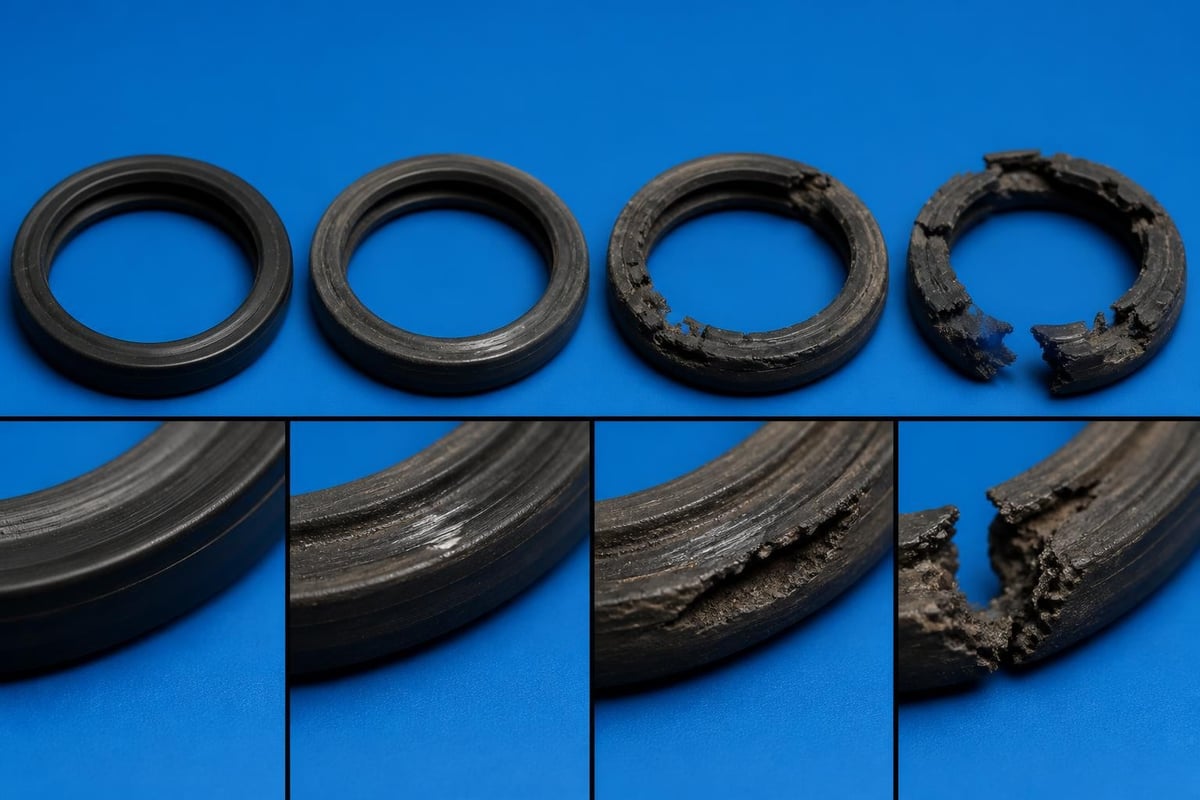
Temperature-related degradation produces hardened, brittle seals that crack rather than flex. Chemical incompatibility between seal materials and hydraulic fluid causes swelling or shrinkage. Each pattern reveals specific operational or maintenance issues requiring correction beyond simple seal replacement.
| Seal Damage Type | Visual Indicator | Root Cause | Repair Scope |
|---|---|---|---|
| Extrusion | Jagged edges, material pushed out | Excessive pressure, improper clearance | Replace seal, check pressure settings |
| Abrasion | Smooth wear, reduced cross-section | Contamination, inadequate lubrication | Replace seal, flush system, filter upgrade |
| Thermal degradation | Hardening, cracks, brittleness | Heat buildup, wrong material | Replace seal with proper compound, investigate heat source |
| Chemical attack | Swelling or shrinkage | Incompatible fluid or contamination | Replace with compatible seal, verify fluid specification |
Performance Degradation and Cycle Irregularities
Hydraulic cylinder repair signs often manifest as subtle performance changes before visible damage occurs. Operators familiar with equipment behavior notice these deviations first.
Reduced Speed and Force Output
Cylinders struggling to complete cycles at normal speed indicate internal leakage across the piston seal. As pressurized fluid bypasses worn seals, the effective force diminishes even though system pressure remains normal at the pump. This internal leakage represents one of the most common yet overlooked hydraulic cylinder repair signs.
Measuring cycle times provides objective data. A cylinder requiring 15 seconds for extension when it previously took 10 seconds has lost approximately 33% efficiency. This degradation rarely improves on its own and accelerates as seal damage worsens.
Performance metrics to monitor:
- Extension/retraction cycle time (measure from start to full stroke)
- Load capacity (maximum weight lifted or force applied)
- Consistency (variation between cycles under identical conditions)
- Holding capacity (ability to maintain position under load without drift)
Position Drift and Holding Failures
Rod drift reveals internal seal failure with particular clarity. When a cylinder under load slowly retracts or extends without operator input, internal leakage allows fluid to bypass the piston seal. Research on detecting internal leakage demonstrates how even small drift rates indicate significant seal compromise that will worsen rapidly under continued operation.
Position-critical applications, such as press operations or automated assembly equipment, suffer immediate quality and safety impacts from drift. For industrial and manufacturing applications where precision matters, addressing drift-related hydraulic cylinder repair signs prevents costly product defects and rework.
Unusual Sounds and Vibration Patterns
Acoustic and vibration changes signal developing problems within hydraulic cylinders and their systems. Experienced maintenance personnel recognize these auditory hydraulic cylinder repair signs as early warnings.
Cavitation and Aeration Indicators
Cavitation produces a distinctive rattling or knocking sound as vapor bubbles form and collapse within the cylinder. This occurs when localized low pressure drops below the fluid's vapor pressure, typically caused by restricted intake flow, damaged seals creating vacuum pockets, or excessive cylinder speed.
Aeration creates a whining or squealing noise as air mixes with hydraulic fluid. Unlike cavitation, which forms vapor bubbles from the fluid itself, aeration introduces external air through seal leaks or low reservoir levels. Both conditions damage seals, scoring cylinder walls and accelerating wear throughout the system.
| Condition | Sound Characteristic | Typical Cause | Immediate Action |
|---|---|---|---|
| Cavitation | Rattling, knocking, gravel-like | Flow restriction, oversized cylinder, high speed | Reduce speed, check intake lines, verify pump capacity |
| Aeration | Whining, squealing | Air leaks, low fluid level | Check reservoir, inspect suction seals, bleed system |
| Metal contact | Grinding, scraping | Contamination scoring, bearing failure | Stop operation, inspect for damage, flush system |
| Pressure spikes | Banging, hammering | Rapid directional changes, shock loading | Add cushions or flow controls, review cycle programming |
Mechanical Binding and Friction Changes
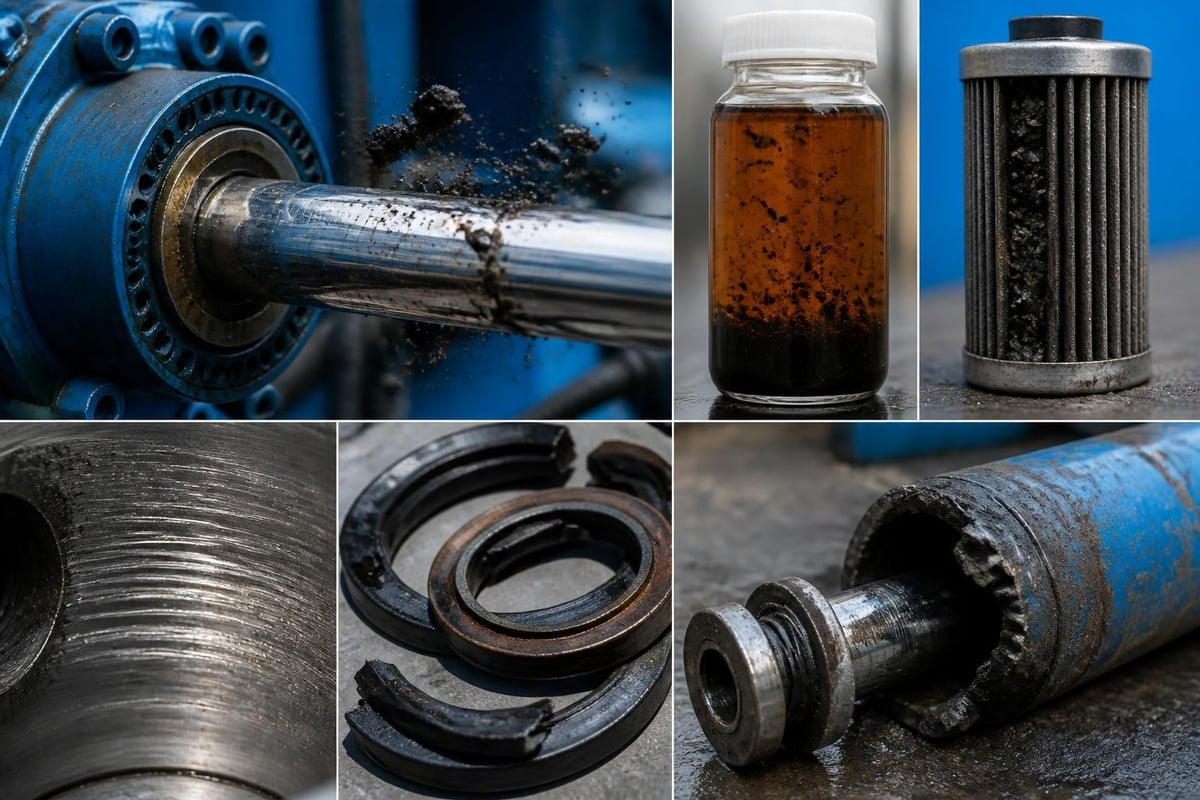
Increased resistance during cylinder movement, sometimes accompanied by jerking or stuttering motion, indicates mechanical problems. Contamination scoring the cylinder bore or rod creates friction that varies through the stroke length.
The impact of water and particulate contamination on hydraulic components demonstrates how contamination causes progressive damage. Initial scoring appears as minor resistance inconsistencies, but continues degrading seals and surfaces until the cylinder binds completely or suffers catastrophic failure.
Physical Damage and Corrosion Evidence
Visual inspection of cylinder exteriors reveals hydraulic cylinder repair signs that predict internal damage and future failures.
Rod Surface Condition Assessment
The cylinder rod surface quality directly affects seal life and contamination control. Chrome plating damage, including pitting, peeling, or scoring, allows contamination to embed in surface irregularities where it continuously damages seals during each stroke.
Rod inspection checklist:
- Chrome plating integrity (no pitting, peeling, or flaking)
- Surface scoring or grooves (indicates contamination or seal abrasion)
- Rust or corrosion (especially at seal contact areas)
- Straightness (bent rods cause side loading and seal failure)
- Cleanliness (accumulated debris indicates wiper seal failure)
Minor surface damage often allows temporary operation, but progressive seal wear accelerates. Precision machining services can restore rod surfaces through grinding and re-chroming, extending cylinder life beyond simple seal replacement.
Barrel and Mounting Integrity
Cylinder barrel damage creates serious safety and performance risks. Cracks in welded barrels, corrosion pitting, or bulging from overpressure represent critical hydraulic cylinder repair signs requiring immediate action.
Mounting point wear appears as elongated pin holes, cracked mounting ears, or bent mounting brackets. These conditions cause misalignment that side-loads seals and bearings, creating secondary damage throughout the cylinder assembly. For operations involving recycling equipment repair welding, addressing mounting damage alongside seal replacement prevents rapid re-failure.
Temperature Anomalies and Heat-Related Symptoms
Thermal monitoring provides early detection of developing problems before they cause failures or visible damage.
Operating Temperature Baselines and Deviations
Hydraulic systems typically operate between 100-140°F during normal use. Temperatures exceeding 160°F indicate efficiency losses, inadequate cooling, or mechanical problems. Infrared thermography identifies hot spots on cylinder bodies that signal internal friction, restricted flow, or seal dragging.
Cylinders significantly hotter than surrounding equipment or components warrant investigation. Troubleshooting guidance from industry reliability conferences emphasizes temperature monitoring as a predictive maintenance tool that reveals problems before performance degradation becomes apparent.
Heat-Induced Damage Indicators
Excessive heat degrades hydraulic fluid, reducing lubrication and accelerating seal deterioration. Darkened or varnished fluid, decreased viscosity, and acidic odors indicate thermal breakdown. These conditions create cascading failures across the hydraulic system, with seals and precision surfaces suffering first.
Heat-related hydraulic cylinder repair signs include:
- Discolored fluid (dark brown or black indicates oxidation)
- Burnt odor from hydraulic reservoir or cylinders
- Hardened or brittle seals showing heat damage
- Varnish deposits on rods or visible through ports
- Decreased system efficiency despite normal pressure readings
Contamination Indicators and Fluid Condition
Fluid cleanliness directly determines seal life, cylinder bore condition, and overall system reliability. Contamination-related hydraulic cylinder repair signs appear gradually but cause expensive damage when ignored.
Particulate and Water Contamination Effects
Metal particles, dirt, and water enter hydraulic systems through worn seals, inadequate filtration, or maintenance errors. Once present, contaminants act as abrasives that score precision surfaces and embed in seals, creating progressive damage with every cycle.
Understanding buffer seal design and service life reveals how contamination causes pressure spikes and premature seal failure. Buffer seals protect rod seals from pressure peaks, but contamination reduces their effectiveness and lifespan.
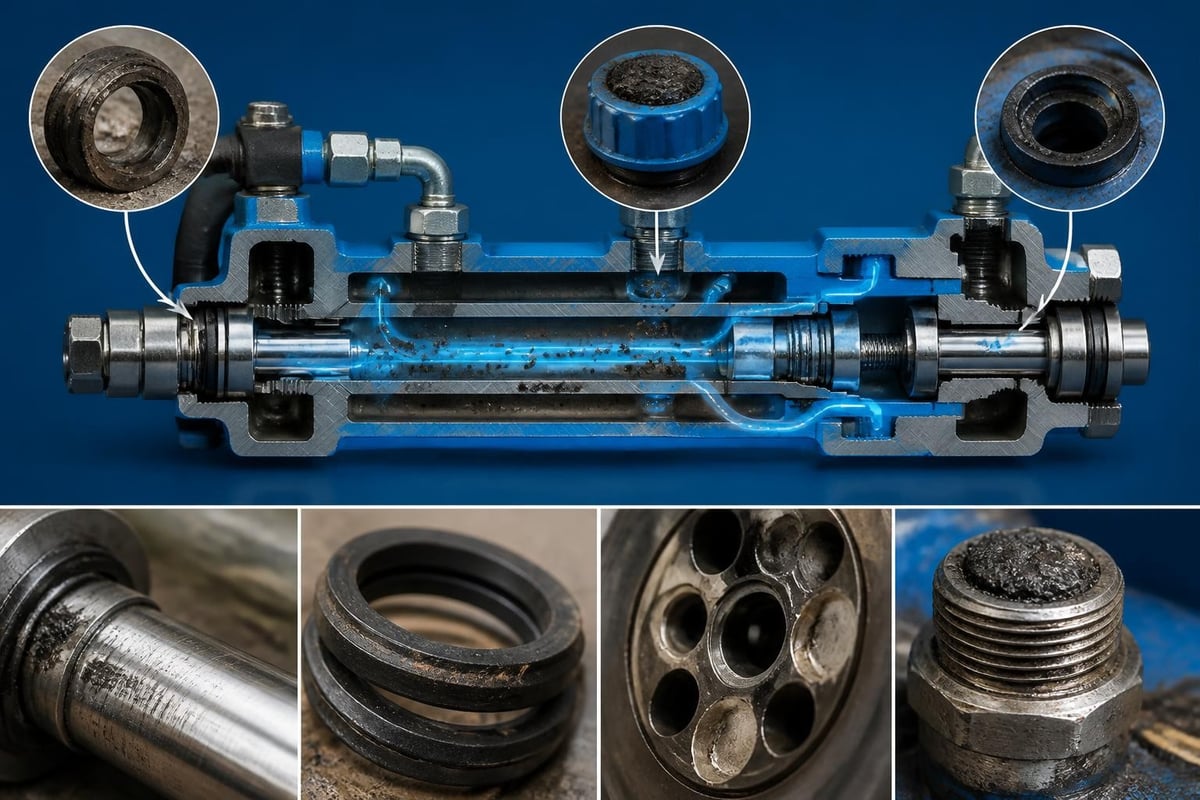
Visual fluid inspection provides preliminary contamination assessment. Milky appearance indicates water contamination, while metallic particles suggest component wear. Professional fluid analysis quantifies contamination levels and identifies wear metals that reveal specific component damage.
| Contamination Type | Visual Indicator | Damage Mechanism | Prevention Method |
|---|---|---|---|
| Particulate | Cloudy fluid, visible particles | Abrasive wear, seal cutting | Proper filtration, clean maintenance practices |
| Water | Milky appearance, separation | Rust, reduced lubrication, seal swelling | Breather maintenance, cylinder storage practices |
| Oxidation products | Dark color, varnish | Sticky seals, valve problems | Temperature control, fluid change intervals |
| Wear metals | Metallic sheen, magnetic particles | Indicates existing damage | Fluid analysis, component inspection |
Wiper Seal Performance and External Contamination
The wiper seal prevents external contamination from entering the cylinder during rod retraction. Dirt accumulation on cylinder rods, especially in aggregate, mining, or outdoor applications, indicates wiper seal failure. This external contamination introduces abrasive particles that damage the rod seal and score the cylinder bore during normal operation.
Regular rod cleaning and wiper seal inspection prevent contamination damage. For equipment operating in harsh environments, upgrading to heavy-duty wiper designs or adding rod boots provides additional protection. These preventive measures cost far less than addressing contamination-caused internal damage.
System Pressure Inconsistencies and Response Changes
Pressure-related symptoms reveal both cylinder-specific problems and system-wide issues affecting cylinder performance.
Pressure Drop Across Cylinders
Measuring pressure at cylinder ports during operation identifies restriction, internal leakage, or valve problems. Significant pressure differences between supply and cylinder inlet suggest line restrictions or valve failures. Pressure drops during the power stroke indicate internal leakage past piston seals.
Portable pressure gauges installed temporarily at cylinder ports provide diagnostic data without permanent instrumentation. Comparing readings between similar cylinders identifies outliers requiring attention. This systematic approach to detecting hydraulic cylinder repair signs enables condition-based maintenance rather than reactive repairs.
Relief Valve Activity and Pressure Spikes
Frequent relief valve operation indicates oversized pumps, incorrect pressure settings, or system restrictions causing pressure buildup. These conditions subject cylinders to pressures exceeding design limits, causing seal extrusion and eventual failure.
Shock loading from rapid directional changes or external impacts creates pressure spikes that damage seals even when normal operating pressures remain acceptable. For hydraulic equipment repair applications, addressing pressure spikes through circuit design improvements prevents recurring seal failures that simple replacement cannot solve.
Implementing Systematic Inspection Protocols
Structured inspection programs detect hydraulic cylinder repair signs before emergency failures disrupt operations. Combining visual checks, performance monitoring, and fluid analysis creates comprehensive condition awareness.
Daily Operator Inspections
Equipment operators perform the most frequent monitoring and notice subtle changes first. Empowering operators to report performance deviations, unusual sounds, or visible leaks enables early intervention.
Daily operator checklist:
- Visual inspection for external leaks or fluid accumulation
- Performance verification (normal cycle times and force)
- Auditory check (no unusual sounds or vibration)
- Rod surface condition (clean, smooth, no damage)
- Mounting points (no looseness or unusual movement)
Documentation transforms observations into trend data. Even brief notes about "slightly slower today" or "minor dampness at rod seal" provide maintenance teams with early warnings and performance baselines.
Scheduled Maintenance Inspections
Monthly or quarterly detailed inspections complement daily operator checks. These maintenance activities include seal inspection, fluid sampling, pressure testing, and component measurements that require equipment shutdown or specialized tools.
Coordinating hydraulic cylinder inspections with planned maintenance windows minimizes disruption. Custom machining services for rod repair or barrel honing integrate with seal replacement during scheduled overhauls, maximizing equipment availability.
Diagnostic Tools and Testing Methods
Modern diagnostic technology identifies internal problems without disassembly, reducing inspection costs and improving accuracy.
Non-Destructive Testing Approaches
Ultrasonic testing detects internal cracks, delamination, or defects in cylinder barrels and rods. This technique proves especially valuable for high-pressure cylinders or critical applications where failure consequences justify additional inspection investment.
Thermography identifies temperature anomalies indicating internal friction, fluid bypassing, or localized heat generation. Thermal patterns reveal problems invisible to visual inspection, enabling targeted repairs rather than complete overhauls.
Available diagnostic methods:
- Pressure decay testing (quantifies internal leakage rate)
- Ultrasonic inspection (detects cracks and material defects)
- Thermographic imaging (identifies heat patterns and hot spots)
- Fluid analysis (reveals contamination and wear metals)
- Performance data logging (tracks cycle times and pressure trends)
Predictive Maintenance Integration
Advanced operations integrate cylinder monitoring into predictive maintenance programs using sensors and data analytics. Pressure transducers, position sensors, and temperature monitors feed real-time data to maintenance management systems that identify developing problems automatically.
While comprehensive monitoring systems require significant investment, even basic data collection improves maintenance planning. Recording cylinder operating hours, cycle counts, and repair history builds knowledge that optimizes replacement intervals and identifies problematic applications requiring design improvements.
Cost Implications of Delayed Repairs
Understanding the financial impact of ignoring hydraulic cylinder repair signs justifies proactive maintenance investments and prevents false economy from delayed action.
Direct Repair Cost Escalation
Minor seal replacement might cost hundreds of dollars when performed proactively. Delaying until internal scoring damage occurs increases costs tenfold through barrel honing, rod re-chroming, or complete cylinder replacement. Contamination damage spreads beyond the initial failure point, requiring extensive system cleaning and component replacement.
Hydraulic system repair specialists recognize how small problems cascade into major failures. A $200 seal kit installed during planned maintenance prevents a $3,000 emergency repair and associated downtime costs.
Production Loss and Secondary Damage
Equipment failures during production create costs far exceeding repair expenses. Downtime, missed delivery commitments, and labor inefficiency multiply rapidly. Secondary damage to connected equipment, product spoilage, or safety incidents add further financial impact.
Emergency repairs typically cost 3-5 times scheduled maintenance due to overtime labor, expedited parts delivery, and rushed work quality. For operations throughout the Western United States where parts availability and service response times vary significantly, maintaining local repair relationships and spare parts inventory reduces emergency costs.
Recognizing hydraulic cylinder repair signs early protects your equipment investment and operational continuity. From subtle performance changes to visible damage, these indicators provide opportunities for planned maintenance that prevents costly emergency failures. Whether you're operating aggregate equipment, manufacturing machinery, or oil and gas systems, systematic monitoring and prompt response to warning signs minimize downtime and extend cylinder service life. LTJ Industrial Services delivers comprehensive hydraulic repair, precision machining, and custom fabrication services throughout the Western United States, helping industrial operators maintain critical equipment and avoid unexpected failures. Contact our team to discuss your hydraulic cylinder maintenance needs and develop proactive service programs that keep your operations running smoothly.