
Selecting the right fabrication partner can determine whether your industrial project succeeds or fails. When you need structural steel components, custom machinery parts, or specialized welding services, understanding how to choose a metal fabrication shop requires careful evaluation of technical capabilities, quality standards, and industry experience. For manufacturers in the oil & gas, aggregate, recycling, and commercial sectors, this decision impacts project timelines, budgets, and long-term operational reliability.
Understanding Core Fabrication Capabilities
Metal fabrication encompasses numerous processes, and not every shop can handle every type of work. When you begin evaluating potential partners, start by mapping your project requirements against their technical capabilities.
Equipment and Process Capabilities
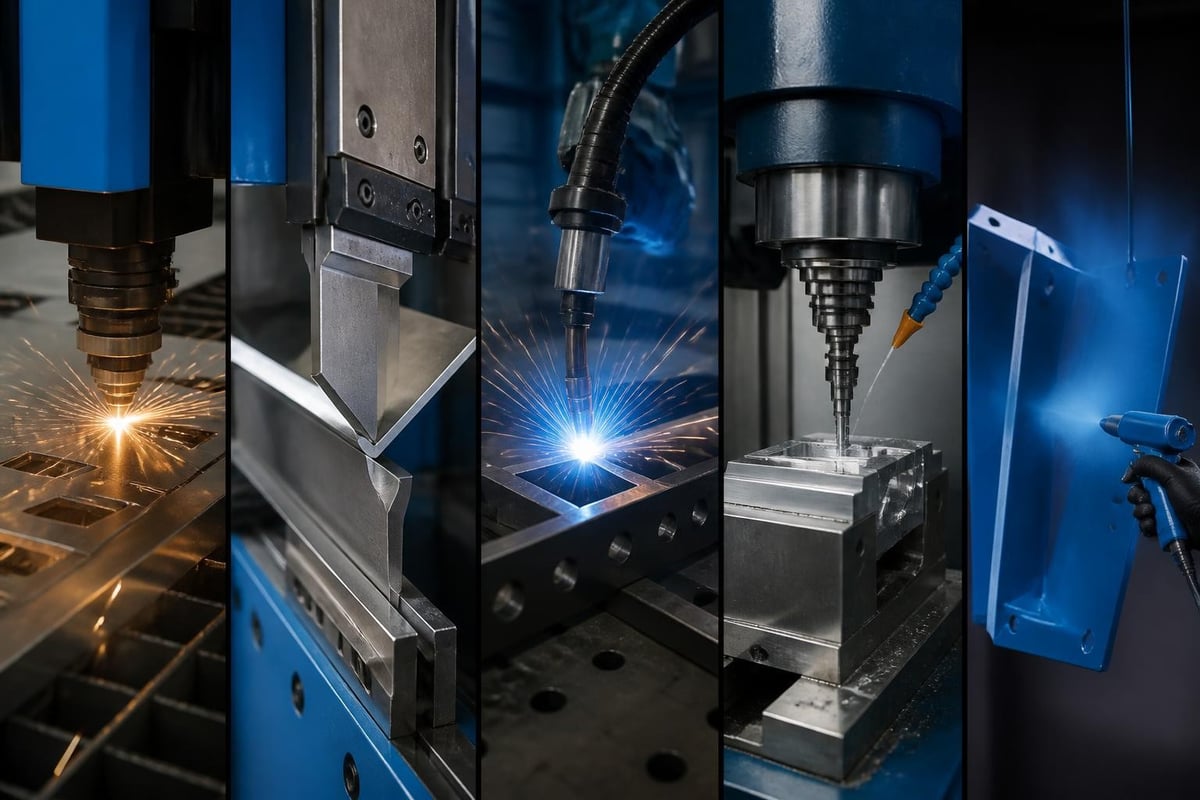
A qualified fabrication shop should maintain modern equipment that matches your project specifications. CNC machining centers, plasma cutting tables, press brakes, and specialized welding equipment represent the foundation of a capable facility. However, equipment alone doesn't guarantee quality results.
Consider these essential capabilities:
- Cutting technologies: Waterjet, plasma, laser, or oxy-fuel cutting for different materials and tolerances
- Forming equipment: Press brakes, rolling machines, and stamping equipment sized for your components
- Welding processes: MIG, TIG, stick, and specialized processes like flux-core or submerged arc
- Machining services: Turning, milling, drilling, and precision grinding capabilities
- Finishing operations: Powder coating, sandblasting, and surface preparation facilities
The custom machining services offered by a shop should align with your tolerances and material requirements. Understanding what metals can be powder coated becomes critical when surface finish and corrosion resistance matter to your application.
Material Expertise and Sourcing
Different industries demand different materials. Oil and gas applications often require corrosion-resistant alloys, while aggregate equipment needs abrasion-resistant steel. Your fabrication partner should demonstrate expertise in sourcing, handling, and working with the materials your project demands.
| Material Category | Common Applications | Key Considerations |
|---|---|---|
| Carbon Steel | Structural components, general fabrication | Cost-effective, widely available, requires coating |
| Stainless Steel | Food processing, chemical equipment | Corrosion resistance, cleanability, higher cost |
| Aluminum | Lightweight structures, marine applications | Weight savings, corrosion resistance, specialized welding |
| Alloy Steel | High-stress components, wear parts | Enhanced properties, heat treatment requirements |
Material certifications and mill test reports should be standard documentation. A shop that cannot provide material traceability introduces risk into your supply chain.
Certifications and Quality Standards
Quality certifications tell you whether a fabrication shop operates with documented processes and proven quality management systems. These credentials matter significantly when projects involve critical applications or regulatory requirements.
Essential Industry Certifications
The American Welding Society (AWS) sets standards that qualified fabricators should meet or exceed. AWS welding standards provide specifications for welder qualifications, procedures, and consumables. When evaluating shops, verify their welders hold current certifications relevant to your project.
Key certifications to look for:
- AWS Certified Welding Inspector (CWI) on staff for quality oversight
- ASME certification for pressure vessels and boiler components
- API 1104 for pipeline and oil & gas welding work
- ISO 9001 for quality management systems
- AISC certification for structural steel fabrication
Understanding the difference between AWS D1.1 and API 1104 helps you specify the right standards for your application. Each standard addresses different welding environments and acceptance criteria.
Quality Control Processes
Certifications mean little without robust quality control procedures. Ask potential fabricators about their inspection processes, testing capabilities, and documentation systems.
A comprehensive quality program includes:
- First-article inspection protocols
- In-process inspection procedures
- Non-destructive testing (NDT) capabilities (ultrasonic, magnetic particle, dye penetrant, radiographic)
- Final inspection and dimensional verification
- Documented quality records and traceability
The National Association of Manufacturers emphasizes supplier development as critical to maintaining quality standards throughout the supply chain. Your fabrication partner should embrace continuous improvement and demonstrate investment in quality systems.
Experience in Your Industry Sector
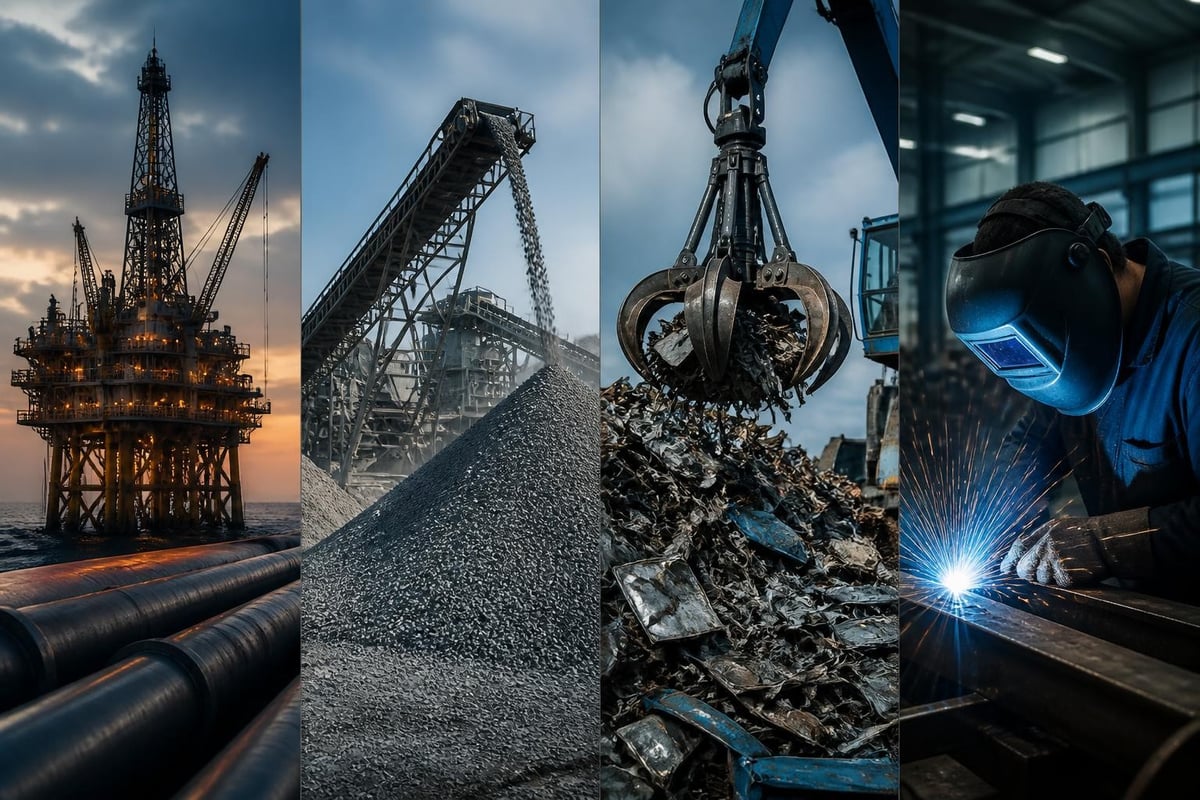
Generic fabrication experience differs significantly from specialized knowledge in your specific industry. A shop that understands recycling equipment repair needs different expertise than one focused on precision aerospace components.
Sector-Specific Knowledge
When learning how to choose a metal fabrication shop, prioritize partners with demonstrated experience in your sector. This experience translates to faster project execution, fewer change orders, and better problem-solving when challenges arise.
For industrial and manufacturing clients, relevant experience includes:
- Oil & Gas: Knowledge of pipeline codes, pressure equipment standards, and field service logistics
- Aggregate and Mining: Understanding of wear-resistant materials, heavy equipment repair, and mining equipment fabrication requirements
- Recycling Industry: Expertise in recycling equipment repair and welding, conveyor systems, and processing equipment
- Manufacturing: Precision machining, production tooling, and custom fixtures
Portfolio and Reference Projects
Request examples of similar projects the shop has completed. Detailed case studies reveal more than a simple project list. Look for documentation that shows problem-solving capabilities, adherence to timelines, and quality outcomes.
Check references thoroughly. Speak with clients who had similar project scopes, budgets, and timeline requirements. Ask specific questions about communication, problem resolution, and final results.
Location and Service Capabilities
Geography impacts project costs, timelines, and service flexibility. The decision between local and distant fabricators involves multiple trade-offs beyond simple pricing considerations.
Shop versus Field Services
Understanding the difference between field welding and shop welding helps you determine which service model fits your project. Shop fabrication typically offers better quality control and lower costs, while field services provide flexibility and eliminate transportation challenges for large assemblies.
A versatile fabricator offers both options:
- Shop fabrication: Controlled environment, full equipment access, efficient workflow
- Field services: On-site repairs, installation support, emergency response
- Hybrid approach: Shop pre-fabrication with field assembly and welding
Companies serving the Western United States from a central location like Rifle, Colorado, can provide efficient service to multiple states while maintaining competitive pricing. Proximity to major industrial corridors reduces mobilization costs for field work.
Response Time and Scheduling Flexibility
Industrial operations cannot afford extended downtime. Your fabrication partner should demonstrate responsiveness and scheduling flexibility to accommodate emergency repairs and time-sensitive projects.
Evaluate response capabilities:
- Standard lead times for quoted work
- Emergency service availability and response times
- Capacity to handle rush projects
- Communication protocols during project execution
- After-hours and weekend service options
The Harvard Business Review highlights supplier onboarding challenges that can delay project starts. Choose shops with streamlined onboarding processes to minimize delays.
Project Management and Communication
Technical capabilities mean little if project management fails. How a fabrication shop communicates, tracks progress, and resolves issues directly impacts your project outcomes.
Documentation and Specification Review
Professional fabricators review specifications thoroughly before providing quotes. They ask clarifying questions, identify potential issues, and suggest improvements based on their experience. This front-end investment prevents costly misunderstandings later.
When you're preparing a request for quote, knowing how to write a fabrication RFQ ensures you communicate requirements clearly and receive comparable bids.
The documentation process should include:
- Detailed specification review and clarification meetings
- Formal quotes with clear scope definitions
- Material specifications and sourcing plans
- Timeline commitments with milestone dates
- Change order procedures and approval processes
Progress Tracking and Updates
Visibility into project status reduces anxiety and enables better planning on your end. Modern fabricators use project management systems that provide real-time updates and documentation access.
| Communication Element | Best Practice | Red Flag |
|---|---|---|
| Project updates | Weekly scheduled reports, milestone notifications | Only responding when you inquire |
| Issue escalation | Immediate notification with proposed solutions | Discovering problems at delivery |
| Documentation | Digital access to drawings, certifications, photos | Paper-only systems, lost records |
| Point of contact | Dedicated project manager | Constantly changing contacts |
Cost Evaluation and Value Analysis
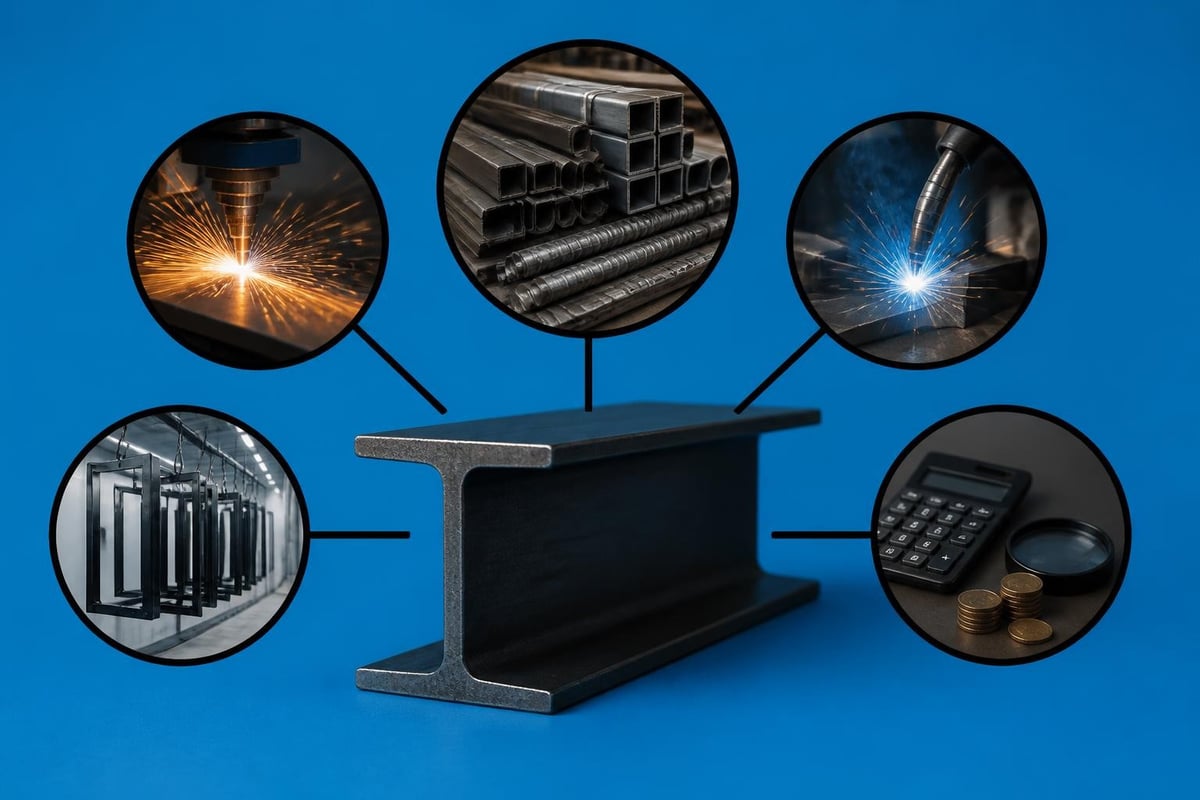
Price alone should never drive your fabrication partner selection. Understanding custom metal fabrication cost components helps you evaluate quotes intelligently and identify true value.
Understanding Quote Components
Comprehensive quotes break down costs into understandable categories. This transparency allows you to compare quotes accurately and identify areas where value engineering might reduce costs without sacrificing quality.
A detailed quote includes:
- Material costs: Steel, consumables, and finishing materials with specifications
- Labor hours: Cutting, forming, welding, machining, and finishing time estimates
- Equipment charges: Specialized tooling, fixturing, or testing equipment
- Finishing costs: Surface preparation, coating, and quality inspection
- Project management: Engineering support, documentation, and coordination
Beware of quotes that seem significantly lower than competitors. Unrealistic pricing often indicates misunderstood requirements, inexperience, or quality shortcuts that create problems later.
Total Cost of Ownership
The cheapest quote rarely delivers the best value. Consider the total cost of ownership when evaluating options:
- Initial fabrication cost
- Quality-related rework or rejection costs
- Delivery and logistics expenses
- Installation and integration costs
- Long-term durability and maintenance requirements
- Warranty coverage and support
NIST Manufacturing Extension Partnership provides practical guidance on supplier selection that emphasizes value over price. Their framework helps manufacturers build repeatable evaluation criteria.
Safety Records and Practices
Safety performance indicates operational discipline and quality culture. Companies with strong safety records typically demonstrate attention to detail across all aspects of their operations.
Safety Metrics and Culture
Request safety statistics from potential fabricators. OSHA recordable incident rates, lost-time injury frequency, and near-miss reporting practices reveal safety culture maturity.
Safety indicators to evaluate:
- OSHA recordable incident rate (compare to industry averages)
- Safety training programs and frequency
- PPE requirements and enforcement
- Hazard communication systems
- Emergency response procedures
For field services, safety becomes even more critical. Verify that the fabricator maintains comprehensive safety programs for both shop and field operations, especially when working in active industrial facilities.
Insurance and Liability Coverage
Adequate insurance protects both parties. Verify that potential fabricators carry appropriate coverage levels:
- General liability insurance (minimum $2 million recommended)
- Workers' compensation coverage
- Professional liability insurance
- Automotive coverage for field service vehicles
- Pollution liability (if applicable)
Request certificates of insurance and verify coverage remains current throughout your project.
Technical Support and Engineering Capabilities
Value-added engineering services distinguish exceptional fabricators from basic job shops. The ability to review designs, suggest improvements, and solve technical challenges creates partnership value beyond simple fabrication.
Design Review and Optimization
Experienced fabricators identify design elements that increase costs or create manufacturing challenges. Their input during the design phase prevents expensive changes during production.
Engineering support capabilities include:
- Design for manufacturability (DFM) review: Identifying cost-saving design modifications
- Material selection guidance: Recommending optimal materials for application requirements
- Welding procedure development: Creating qualified procedures for critical applications
- Tolerance analysis: Ensuring specifications match functional requirements
- Value engineering: Finding cost reductions without compromising performance
When evaluating how to choose a metal fabrication shop, assess their willingness to collaborate on design optimization. Shops that simply execute drawings without question miss opportunities to improve outcomes.
Problem-Solving Capabilities
Manufacturing challenges arise on nearly every project. Your fabrication partner should demonstrate problem-solving skills and creative thinking when standard approaches fall short.
Look for evidence of:
- Custom tooling and fixture design capabilities
- Process development for unique applications
- Troubleshooting expertise for quality issues
- Continuous improvement initiatives
- Investment in employee training and skill development
Capacity and Scalability
Your current project may be modest, but business growth requires partners who can scale with you. Understanding a fabricator's capacity prevents future disruptions when volumes increase or projects grow more complex.
Current Capacity and Lead Times
Shops operating at full capacity struggle to accommodate rush work or volume increases. During the evaluation process, assess current workload and capacity utilization.
Questions to ask:
- What are your current lead times for standard projects?
- How much capacity do you reserve for existing customers versus new work?
- What's your process for handling volume fluctuations?
- Can you scale up quickly if project requirements increase?
A fabricator with 10-20% spare capacity can respond to changing needs more effectively than one operating at maximum utilization.
Growth Capabilities
Beyond current capacity, evaluate the shop's ability to grow alongside your business. Recent equipment investments, facility expansion plans, and workforce development programs indicate commitment to long-term capability growth.
Partnership-oriented fabricators invest in capabilities that serve their key customers' evolving needs. This alignment creates mutual success and reduces the risk of outgrowing your fabrication partner.
Making the Final Decision
After evaluating technical capabilities, quality systems, experience, and cultural fit, synthesize your findings into a structured decision framework.
Weighted Selection Criteria
Different factors carry different importance based on your specific needs. Create a weighted scoring system that reflects your priorities:
| Selection Criterion | Weight | Shop A Score | Shop B Score | Shop C Score |
|---|---|---|---|---|
| Technical Capabilities | 25% | 8.5 | 9.0 | 7.5 |
| Quality & Certifications | 20% | 9.0 | 8.0 | 8.5 |
| Industry Experience | 15% | 9.5 | 7.0 | 8.0 |
| Location & Services | 10% | 7.5 | 8.5 | 9.0 |
| Cost & Value | 15% | 7.0 | 9.0 | 8.0 |
| Communication | 10% | 8.5 | 8.0 | 7.0 |
| Safety Record | 5% | 9.0 | 8.5 | 8.0 |
Customize weights to match your project's critical success factors. A highly technical aerospace component requires different weighting than standard structural fabrication.
Trial Projects and Relationship Development
Consider starting with a smaller trial project before committing to major work. This approach validates capabilities and reveals how the shop performs under real conditions.
A phased engagement strategy reduces risk:
- Initial project: Small to medium complexity, moderate timeline pressure
- Performance review: Evaluate quality, communication, and timeline adherence
- Expanded engagement: Larger projects or multiple concurrent jobs
- Strategic partnership: Long-term agreement with preferred pricing and capacity allocation
Building relationships takes time, but the investment pays dividends through improved communication, better pricing, and priority service during critical situations.
Choosing the right metal fabrication shop requires systematic evaluation of technical capabilities, quality systems, industry experience, and cultural alignment with your business needs. By applying these selection criteria and taking time to verify credentials, review past performance, and assess problem-solving capabilities, you'll establish partnerships that support your operational goals and contribute to long-term success. LTJ Industrial Services brings comprehensive fabrication, welding, and machining expertise to commercial and industrial clients throughout the Western United States, with the certifications, equipment, and industry knowledge to handle projects from routine repairs to complex custom fabrication. Contact our team to discuss your specific requirements and experience the difference that qualified, responsive fabrication support makes for your operation.